





Discovery 4 Air Suspension Problems: Which Part Has Failed?

Discovery 4 air suspension problems usually trace to one of four parts: a leaking air spring, a tired or overheating compressor, a leaking valve block, or a faulty height sensor 12. Cars.co.za’s used Discovery 4 buyer’s guide names air suspension issues among the model’s known problems 4. The expensive mistake is guessing. The same system runs on the Discovery 3 and Discovery 4 models fitted with air suspension, so the diagnosis below applies to both.
Key Takeaways
- A car that sits lower after standing, with no warning light, most likely has a leak, usually at an air spring or a valve block.
- A warning light with stored fault codes points to an electrical part: a height sensor, a valve solenoid or the compressor itself.
- A “compressor overheated” message is often a leak in disguise. Fix the leak first or a new compressor can overheat too.
- Whining, clicking or grinding while driving is a sign of a worn compressor.
- Leave a leak too long and it can take the compressor with it, turning one part into two.
How the Discovery 3 and 4 air suspension works
Not every Discovery of this generation has air suspension, so confirm what is under your vehicle before ordering anything. On the ones that do have it, South African magazine SA 4x4 described the setup in its road test of the Discovery 4 3.0 TDV6 HSE: instead of coil springs there are “four air bladders”, and “an onboard air compressor controls the pressure within the air bladders and therefore the desired spring rate, comfort and ride height” 3. SA 4x4 measured ground clearance rising from 185 mm on-road to 310 mm off-road 3.
Check yours has air suspension at all
Not every Discovery of this generation does, so confirm what is under your vehicle before you order a single part.
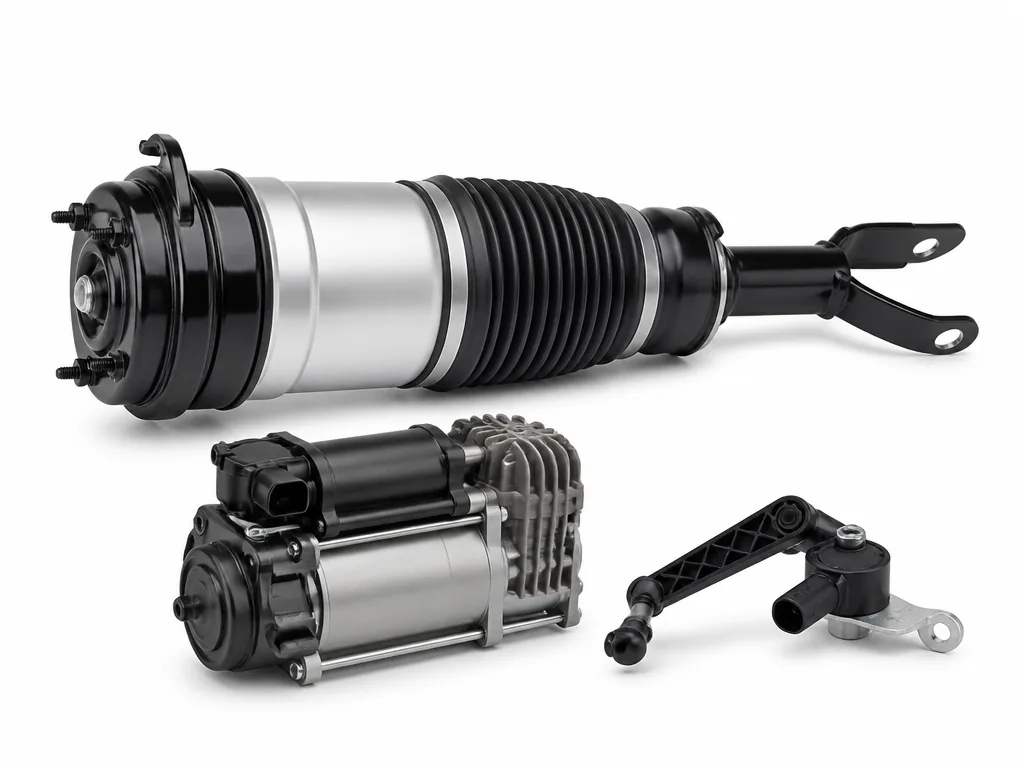
Expedition Parts describes the system’s layout 1:
- One compressor that builds the air pressure.
- Four air springs, one per wheel. Owners often call them air bags or air shocks.
- Three valve blocks: one on the front axle, one on the rear axle, and a third that manages the air reservoir. Expedition Parts, a German Land Rover specialist, says this third block is fitted directly on the compressor 1.
- An air reservoir between the axles, which lets the system make small height changes without starting the compressor every time 1.
- Four height sensors, one at each wheel, which tell the control module how high each corner is sitting 1.
Two features of the system make diagnosis tricky. First, the vehicle levels itself even while parked 1. Second, the compressor cannot run with the engine off, so the parked vehicle can only level downwards, by letting air out 1.
That is why this guide sorts faults by symptom first. Once you know whether you are dealing with a leak or an electrical fault, the parts list gets much shorter.
Leak or electrical fault? Start here
A diagnostic scan before any parts are bought is the cheapest first step. Stored fault codes tell you whether to look at the electrical side or for a leak, and reading them first is how you avoid paying for a set of air springs you did not need.
Problem 1: Leaking air springs
What you notice: the vehicle sits lower after standing for a while 1. Aerosus, an aftermarket air suspension manufacturer, adds in its Discovery 3 guide a bumpy, rough ride, a compressor that seems to run non-stop, and a ride height that drops or sags 2.
Why it happens: the rubber of the air spring breaks down with age and develops holes. Aerosus also warns that struts which are displaced or incorrectly fitted can puncture the spring 2.
Why it matters: a small leak causes mild sagging at first. Left alone, the compressor overworks trying to make up the lost air and can fail, and then “you’ll need to replace the compressor AND air springs” 2.
A leak left alone turns into two parts
Leave a leak too long and it can take the compressor with it, turning one part into two.
How to find it: stop the system from levelling itself, then watch which corner drops. Expedition Parts disconnects the battery so no valves can open and the vehicle sinks only at the leaking wheel or axle 1.
The leak test, in order
- Support the chassis on axle stands before letting any air out.
- Stop the system levelling itself, by disconnecting the battery or pulling the fuse for your own vehicle.
- Watch which corner sinks. With no valves able to open, only the leaking wheel or axle drops.
- Spray soapy water on the air springs, the valve block and the pipe joints, and look for bubbles.
The fix: replace the leaking air springs.
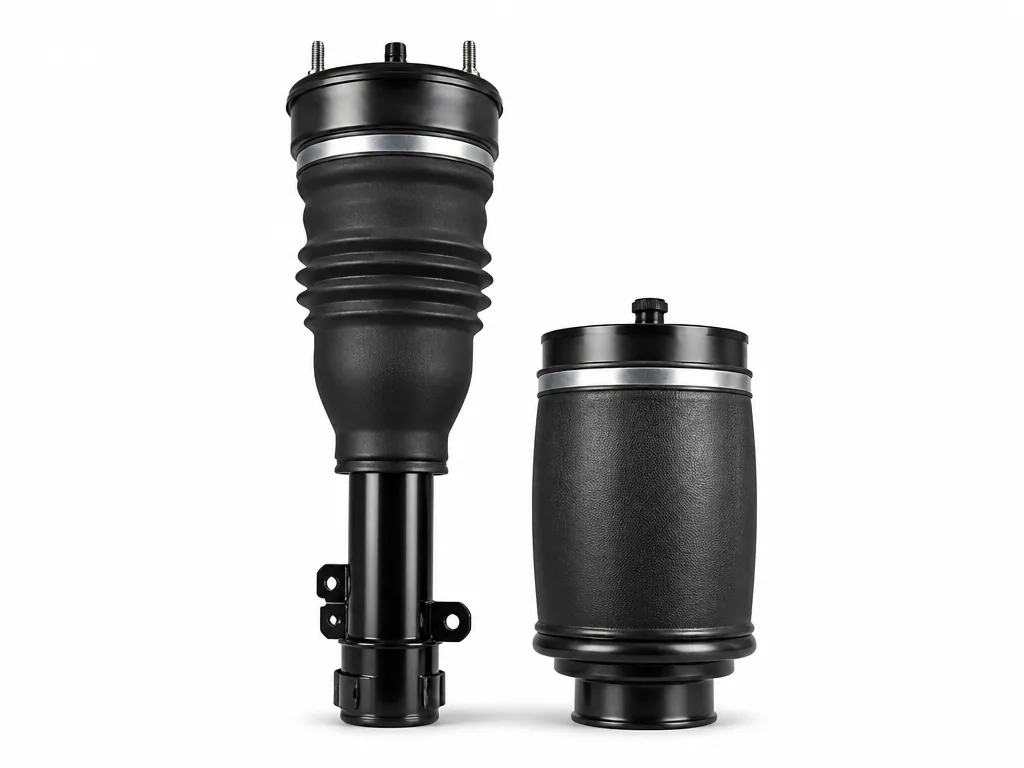
Discovery 3 / 4 air springs, front or rear
Tell us which corner is dropping, whether it is a Discovery 3 or Discovery 4, and send the VIN so the spring matches your vehicle.
Problem 2: Worn or overheating compressor
What you notice: Aerosus lists a lowered ride height and “whining, clicking, and/or grinding sounds when driving” 2. Expedition Parts describes the overheating message: the compressor has a temperature monitor, and when it gets too hot the display warns you and the compressor stops working until it has cooled down 1. Its list of error messages also includes general suspension faults and a warning that only normal height is available 1.
Why it happens: compressors wear over time 2. Expedition Parts says overheating often happens when a lot of height changes are requested in a short time, or when leaks mean the compressor cannot build pressure in the usual time and runs for a long time without cooling down 1.
An overheating message is often a leak in disguise
Fix the leak first, or a new compressor can overheat for exactly the same reason.
The fix: this is the order that saves money. Fix any leak first, because a new compressor fed by a leaking system can overheat for the same reason 1. Then decide between a rebuild and a replacement. Expedition Parts says maintenance kits for the compressor and its internal seals exist, “but not every compressor is suitable for maintenance, sometimes a new one is needed” 1.
Where it is and which one you have: Expedition Parts places the compressor in front of the rear wheel on the left side of the vehicle 1. It also says that until about 2012 Land Rover fitted a Hitachi compressor, then moved to a more powerful AMK unit, and that the two use different temperature sensors, so a swap from one to the other needs a software update or the old sensor kept 1. That is one specialist’s account and we have not confirmed it against a second source, so give us your VIN and we will match the right air suspension compressor to your vehicle.
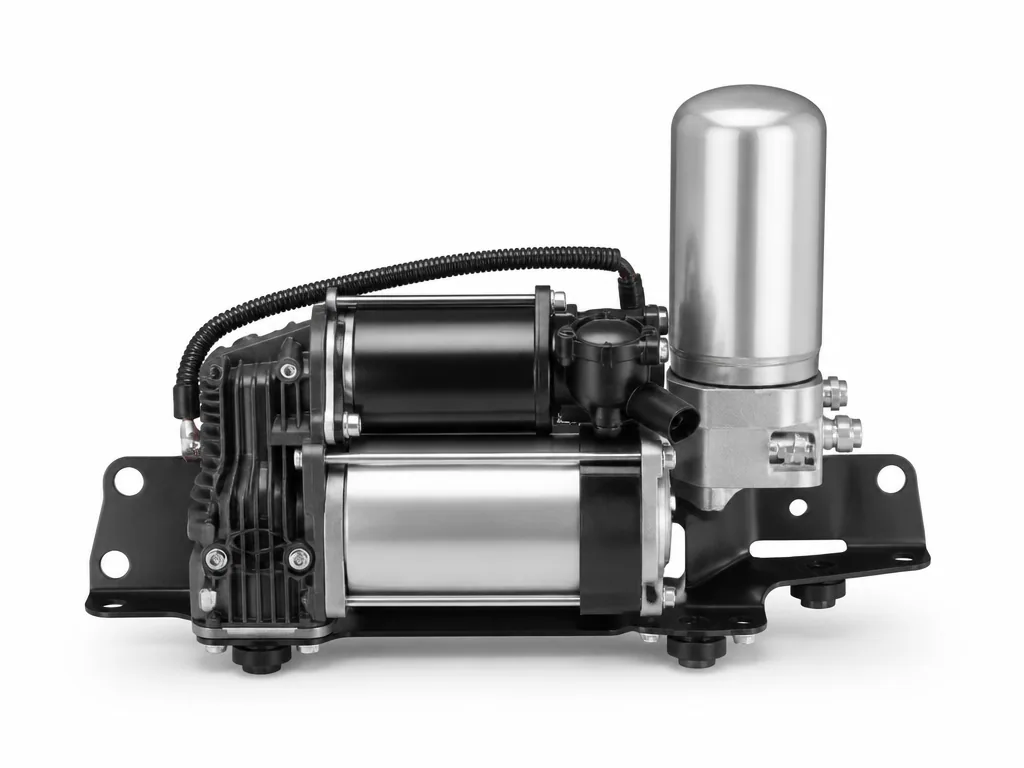
Discovery 3 / 4 air suspension compressor
Send the VIN and the model year so the compressor matches your vehicle. If you are still chasing a leak, tell us that too, and we can quote the spring or valve block alongside it.
Problem 3: Leaking valve blocks
What you notice: a lower ride height 2, often at one axle or one corner. Aerosus says broken valve blocks most often leak air out of the system, which “leads to sagging and forces your compressor to overwork” 2.
How to find it: when one wheel has dropped, Expedition Parts says to start looking between that wheel and its valve block, and to check the valve block itself with a leak detection spray 1.
| Which of the three blocks | Where it sits |
|---|---|
| Front | On the front axle. |
| Rear | On the rear axle. |
| Reservoir | Fitted directly on the compressor, according to Expedition Parts. |
The fix: Aerosus recommends a full valve block replacement once a block is broken 2.
The lesson is simple: test the air springs, the valve block and the pipe joints in the same session before you buy anything. If the block is the leak, we can quote a replacement air suspension valve block for the front, rear or reservoir position.
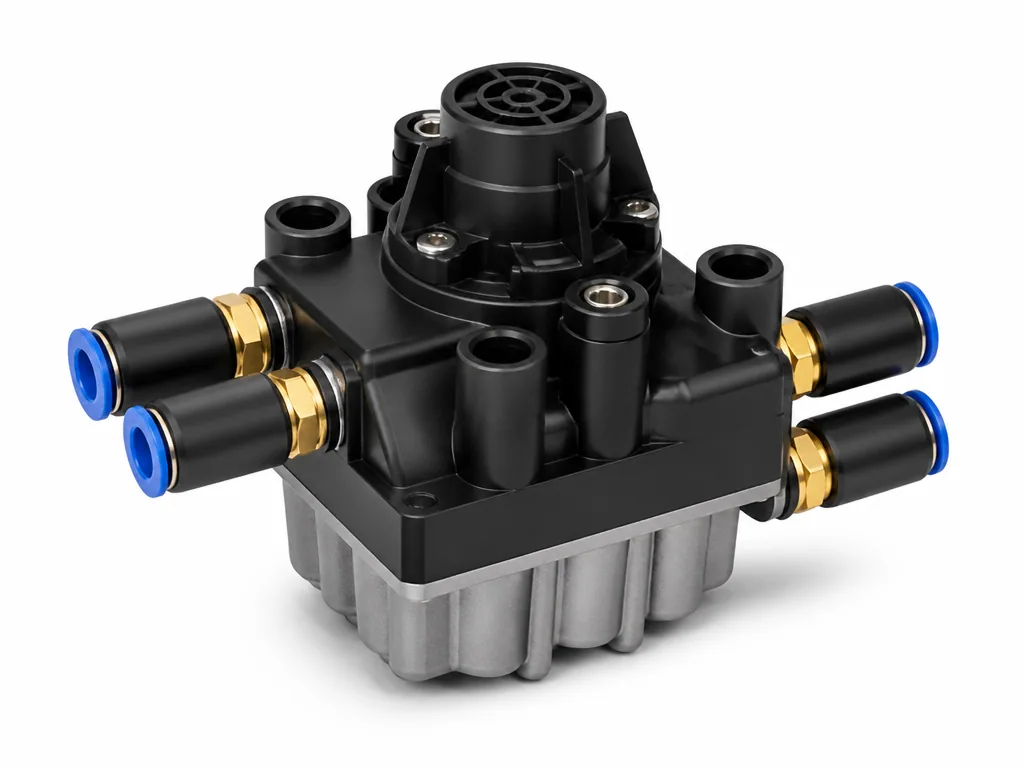
Discovery 3 / 4 air suspension valve block
There are three blocks: front, rear and reservoir. Tell us which one failed your leak test, plus your VIN.
Problem 4: Height sensor faults
Height sensors are easy to overlook.
Expedition Parts describes two other ways the sensors trigger a suspension fault:
- Fast driving on rough tracks. The height sensors send so many rapidly changing signals that the control module cannot keep up and switches off. Restarting the vehicle or clearing the fault usually cures it, if nothing has been damaged 1.
- Electronic lift kits. Modules that raise the car do so by changing the height sensor signal. If the sensor was not fitted and calibrated centrally, raising the car and then selecting off-road height can push the sensor past the end of its range and cause a suspension fault 1.
If a scan names a sensor, send us the corner and your VIN and we will quote the matching ride height sensor.
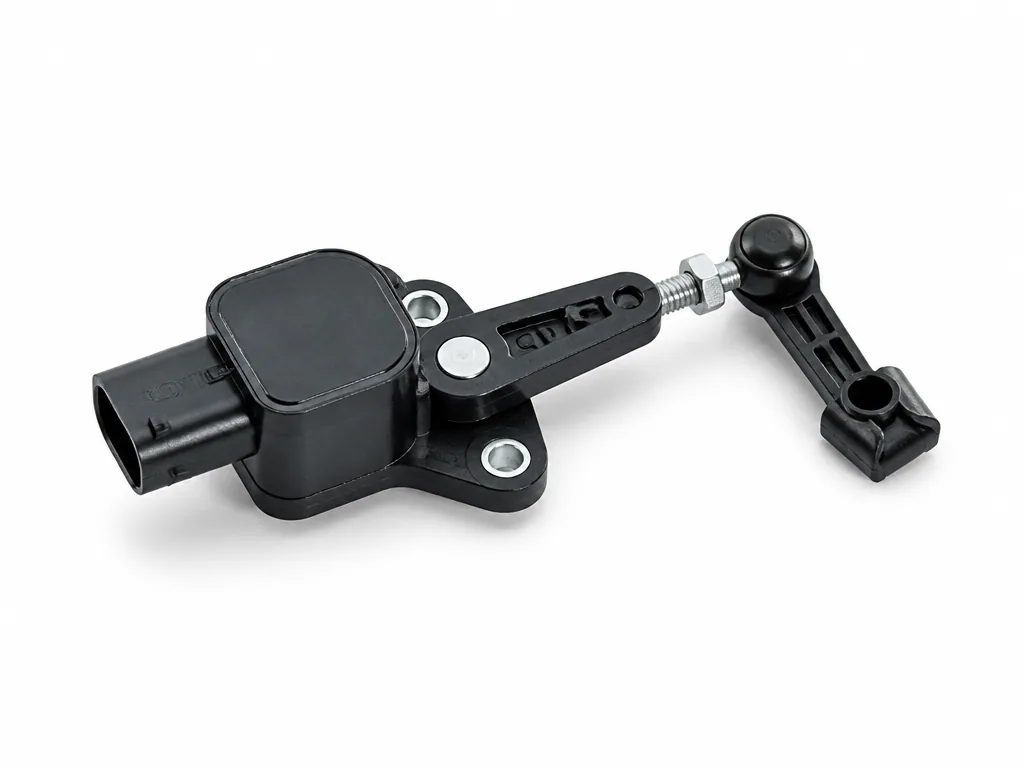
Discovery 3 / 4 ride height sensor
There is one at each wheel. Tell us which corner the scan named, plus your VIN, and we will match the sensor to your vehicle.
What decides the repair bill
We have not published rand prices here. We could not find two independent South African sources for air suspension part prices, and a quote from a UK or German shop tells you little about a part landed in Durban. What we can say is what moves the bill:
- How many parts you buy. A leak left too long can mean an air spring and a compressor instead of just the spring 2.
- Rebuild or replace. Seal kits exist for some compressors and valve blocks, but not every unit can be rebuilt 1.
- Which model and year. According to Expedition Parts, the compressor changed during the Discovery 4’s life, and the two types use different temperature sensors 1. Your VIN settles which one you need.
For the full list of what fits your vehicle, start with our Discovery 4 air suspension parts page, or browse general Discovery 3 parts and Discovery 4 parts. The Discovery 3 and 4 are no longer sold new, so the parts desk works from your VIN.
Found the leaking part?
Send us the model, the VIN and the part that failed your test. The parts desk at SparesBoyz in Durban North will come back with the options. Phone and email details are on our contact page.
FAQ
How do I reset the air suspension on my Discovery 3 or Discovery 4?
There is no single reset that fixes every fault. Expedition Parts describes two cases where a restart helps. A fault after a fast drive on rough tracks usually clears when you restart the vehicle or clear the fault, as long as nothing is damaged 1. A fault straight after starting can happen if you turn the key through before the system has finished its self-check, and a patient restart avoids it 1. A fault that comes back needs its codes read.
How do I know if my suspension compressor is bad?
Listen and watch. Whining, clicking or grinding while driving and a lowered ride height point to a worn compressor 2. An overheating message points to a compressor that is running too long, which is often caused by a leak somewhere else 1. Rule out leaks before condemning the compressor.
Do you need an air compressor for air suspension?
Yes. On the Discovery 3 and 4 the onboard compressor controls the pressure in the air springs, and with it the ride height 3. The reservoir lets the system make small height changes without starting the compressor each time, but the compressor is what builds the pressure in the first place 1. With the engine off, the compressor does not run, so the vehicle can only lower itself 1.
What are common faults with air suspension?
On these Discoverys the recurring faults are leaking air springs, worn compressors, leaking valve blocks and height sensor faults 12. They are linked: a leak makes the compressor work harder, which is why a single unrepaired leak can end in two new parts 2.
Sources
- Expedition Parts — Air Suspension and typical faults – Discovery 3 / 4 (8 August 2020)
- Aerosus — 3 Common Land Rover Discovery 3 (LR3) Air Suspension Problems (20 July 2020)
- SA 4x4 — Off-road test: Land Rover Discovery 4 3.0 TDV6 HSE
- Cars.co.za — Used Land Rover Discovery 4 (2009-2017) Buyer's Guide
Need a part for your Land Rover?
Send the vehicle, ideally the VIN, and the part you need. The parts desk will come back with the options.
Disclaimer
This article is general information, not a diagnosis of your vehicle. Land Rover Pro Spares is a parts supplier, not a repair workshop. Have faults checked and repairs done by a qualified mechanic, and check with a Land Rover dealer whether any open recall applies to your vehicle before paying for a repair.
Land Rover, Defender, Discovery, Freelander, Range Rover, Evoque and Velar are trademarks of Jaguar Land Rover Limited. Land Rover Pro Spares is an independent parts supplier and is not affiliated with, endorsed by or sponsored by Jaguar Land Rover.