




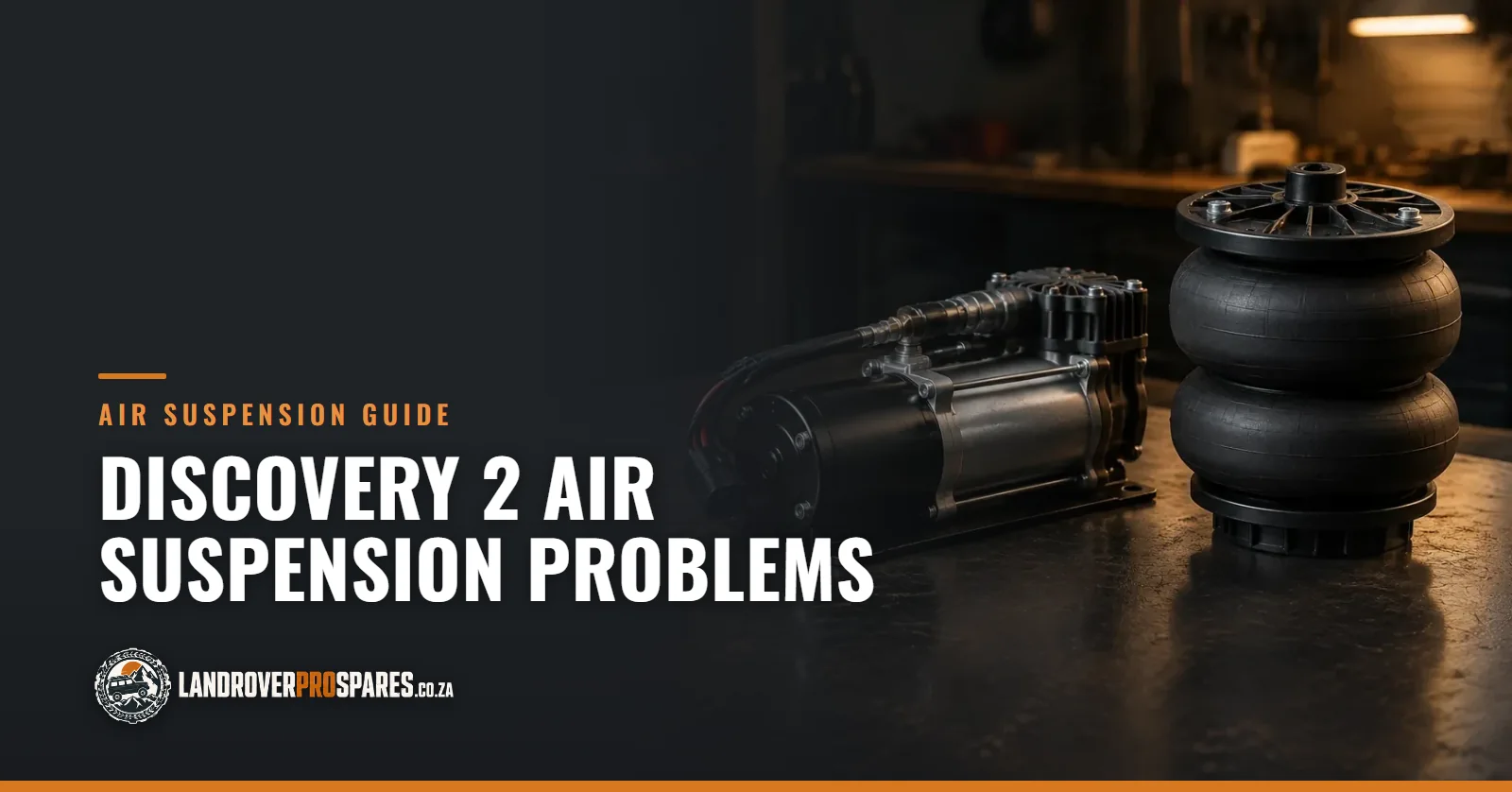
Discovery 2 Air Suspension Problems: Which SLS Part Failed?

Discovery 2 air suspension problems come down to a short list of parts, because the system is small. The self-levelling suspension (SLS) on the Discovery 2 works on the rear axle only, with two air springs, two height sensors, one air supply unit and a control unit 1. Land Rover’s workshop manual lists what each failure does to the vehicle 23, and matching your symptom to that list is the quickest way to tell a tired compressor from a broken height sensor before you spend money.
Key Takeaways
- The Discovery 2 system is rear-only: two air springs, two height sensors and one compressor unit, run by the same control unit as the ABS.
- A rear that will not rise points to the compressor, its relay or its wiring. A rear that will not level at all points to a height sensor or its link.
- A steady amber SLS light means a fault has been detected. Read the stored codes before buying parts.
- Some “faults” are normal: the compressor only lifts the rear with the engine running, and off-road height drops back above 30 km/h.
- A new height sensor has to be calibrated after it is fitted.
How the Discovery 2 self-levelling suspension works
SLS was an option on the Discovery Series II, not standard. Vehicles without it have coil springs at the rear, and vehicles with it have two air springs in their place 4. Its job is to keep the rear level when the load is uneven or when you are towing 1. The control unit is shared with the anti-lock brakes, which is why Land Rover calls it the SLABS ECU (self levelling and anti-lock braking system) 1.
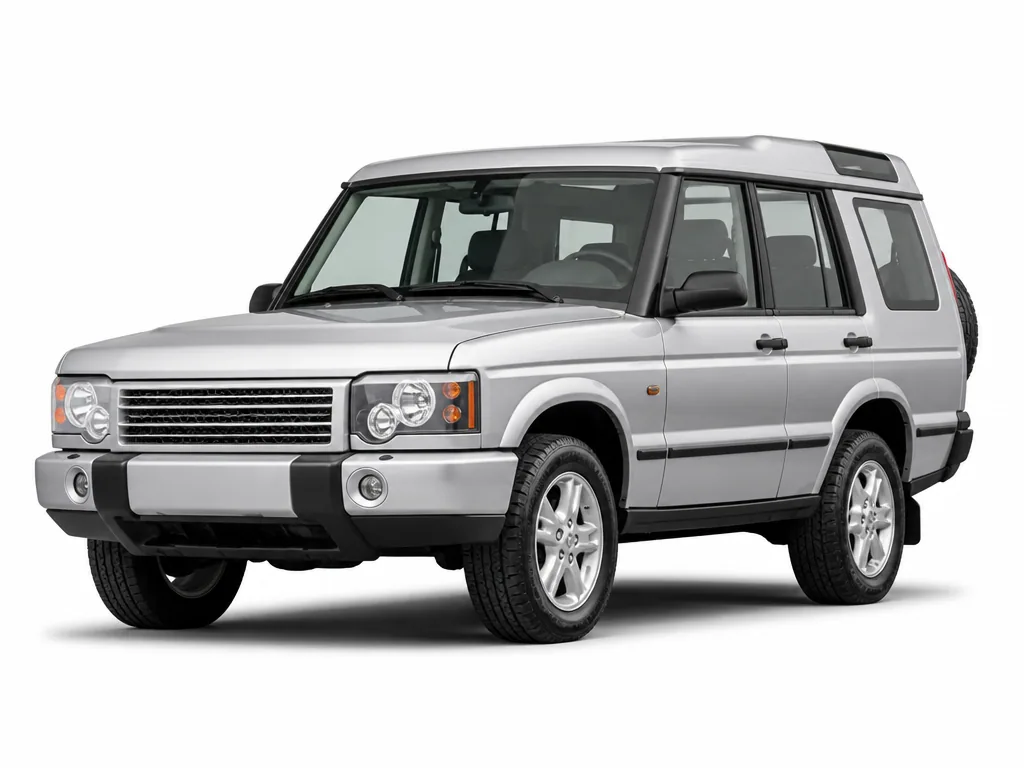
Here is where each part sits, according to the manual:
| Part | Where it is |
|---|---|
| Air supply unit: 12 V motor, compressor, air dryer, pressure limiting valve, exhaust valve and two air control valves | In a plastic housing on the outside of the left-hand chassis rail 5 |
| Air intake filter | In the left-hand "E" post, behind the tail lamp 6 |
| Two height sensors | On the outside of each chassis rail, ahead of the rear axle, linked to the top of the radius arm 7 |
| Two air springs | Between the chassis and the rear axle 4 |
| SLABS ECU | Behind the passenger glove box 8 |
| SLS relay | In the engine compartment fusebox 9 |
The SLS warning lamp is in the bottom left corner of the instrument pack. A steady amber light means the system has detected a fault 1, and the fault codes are stored in the SLABS ECU, where Land Rover’s TestBook diagnostic tool reads them 6.
Which manual we used
The details in this guide come from the North American edition of Land Rover's Discovery Series II workshop manual (1999 model year on, 6th edition), the edition we could open in full. Running changes and market differences exist, so give us your VIN when you order.
Normal behaviour that looks like a fault
Before you condemn a part, rule out the things the system does on purpose. All of these come from the manual’s description of how SLS operates:
| What you see | Why it happens |
|---|---|
| The rear does not lift with the engine off | The compressor only raises the rear with the engine running, except when the accessory remote handset is used 10 |
| The rear settles a little after unloading | Parked with a door open and the ignition off, the rear may lower to within 20 mm of normal height as load comes out 10 |
| Nothing happens on very uneven ground | If the rear axle is articulated by more than 100 mm, the ECU will not activate the system 10 |
| Off-road height drops back on the road | Above 30 km/h the ECU lowers off-road mode to standard height 11 |
| Three beeps when you press the off-road switch | The request was refused because of axle articulation or a system fault 11 |
| The compressor stops on its own | The ECU times the compressor and stops it from exceeding its duty cycle 8 |
Off-road mode also needs the engine running, all doors closed and a speed below 30 km/h, and the switch has to be held for at least half a second 111. Land Rover quotes 15 to 20 seconds to go from normal to off-road height at sea level 11.
Problem 1: The rear sits low and will not rise
The manual’s failure table is direct about this one: a faulty relay, a harness fault or a compressor fault means the vehicle “does not level upwards” 3. The compressor is not needed to let air out of the springs 9, so a Discovery 2 with a dead compressor can still lower itself but cannot lift. The stored codes cover the compressor power supply 6, so read them, and check the SLS relay in the engine compartment fusebox 9, before you buy a compressor.
Check the intake filter first
The compressor breathes through its own filter in the left-hand "E" post, behind the tail lamp, and the filter is replaced as a complete assembly 6.
South African owners have been through this. In a 2010 thread on the SA 4x4 Community forum, a Waverley owner found his compressor switched on for about 10 seconds and then off, so the air bags did not inflate fully 12. A Hillcrest owner in the same thread asked whether the filter feeding the compressor had been checked: a clogged one makes the compressor battle, and since he replaced his, his Discovery “lifts its rear much faster” 12.
Two other causes came up in that thread. A Boksburg owner traced a noise to worn compressor bearings, and the compressor was replaced 12. Another member reported the plastic intake pipe from the filter melting and blocking the intake 12. If the codes, the relay and the filter all check out, the Discovery 2 air compressor is next.
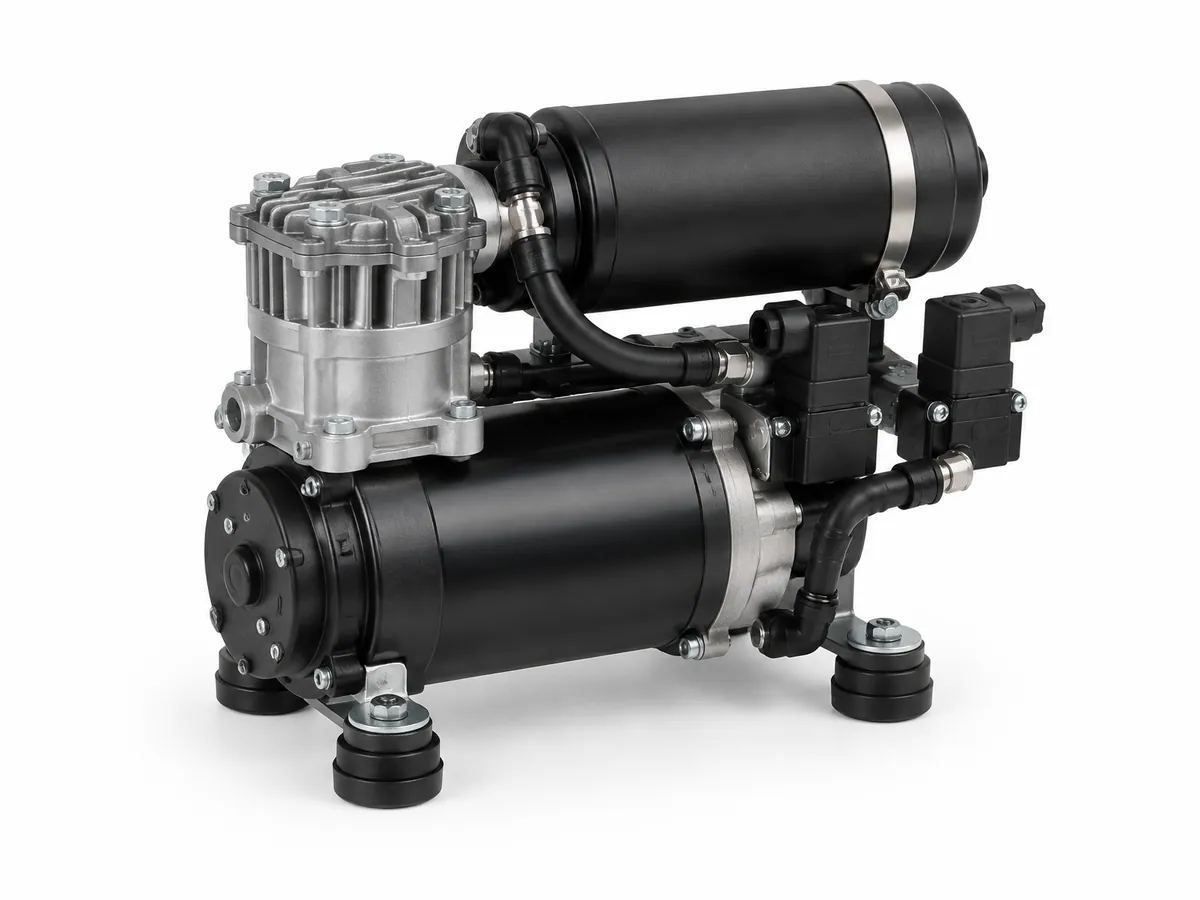
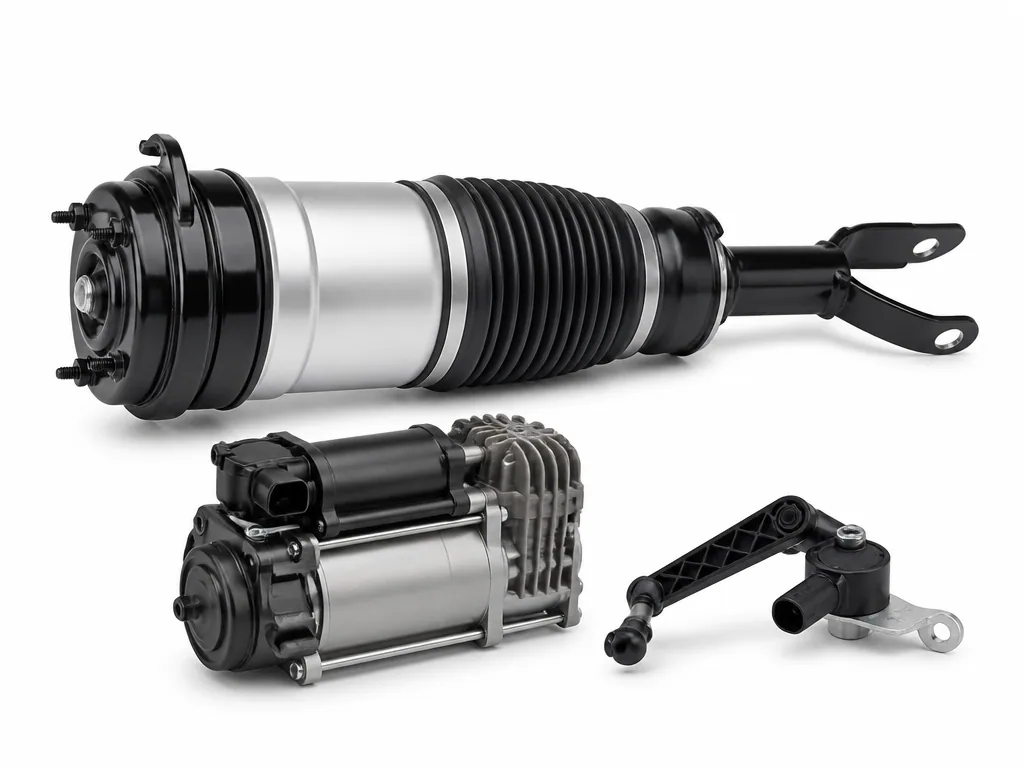
Discovery 2 SLS compressor
Tell us whether the codes named the compressor supply, and send your VIN so the unit matches your vehicle.
Problem 2: Uneven levelling, valves and leaking air springs
Each rear air spring has its own air control valve inside the air supply unit, and the ECU works each one separately 6. If a valve sticks open or shorts, the manual says the vehicle “does not level or levels unevenly” 3. A Somerset West owner of a 1999 Discovery 2 Td5 found a missing plunger spring and dirty nozzles in his valves, cleaned them, and reports the system has worked for about 6 years and 40,000 km since 13.
A drop is not always a leaking bag. A Barkly East owner whose bags and lines were not leaking still had a rear that dropped at random, equally on both sides 13. So check the valves and sensors as well as the springs.
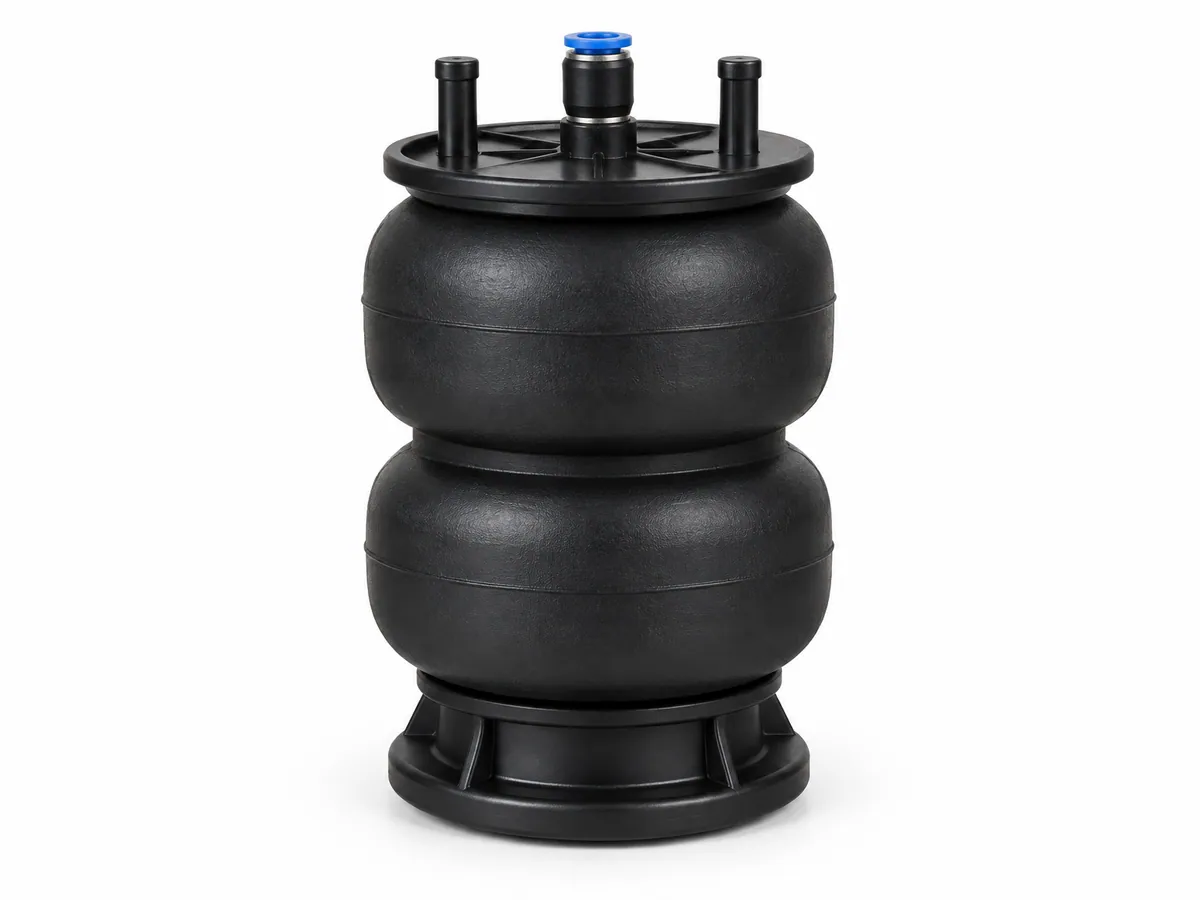
The air springs themselves are checked by eye. Each bag is fibre-reinforced rubber 4, and the manual’s instruction when one comes off is to check the bag for damage and replace the whole air spring if it is damaged 14. The system has to be depressurised with TestBook first, and about 1 bar stays in it afterwards 14. If yours fails that check, we can quote rear air springs for one side or both.
Discovery 2 rear air spring
Tell us left, right or both, and send your VIN.
Problem 3: Height sensor faults
Each height sensor reads the angle of a short arm linked to the top of the radius arm 7. The manual lists three height sensor failures, and all three have the same result: the vehicle will not level. They are a sensor output stuck at 5 V, an output stuck at 0 V, or a broken link between the radius arm and the sensor 2. The link is the one you can check by eye, so look at it first.
Make the system safe before you unbolt a sensor
The manual warns that otherwise the chassis may drop onto the bump stops during the repair 15. An Edenvale owner on the SA forum gives the practical version: disconnect the battery before removing a height sensor, or the rear drops to the bump stops 13.
Sensors can also cause hunting. The same Somerset West owner says the “hunting and buzzing” another member described was cured on his vehicle by replacing the ride height sensors 13. After fitting, the manual requires the sensor to be calibrated with TestBook and a pair of calibration blocks that set the axle-to-chassis height 715. The Edenvale owner adds that a Nanocom diagnostic tool can check the level sensor 13. Budget for that calibration when you order a height sensor.
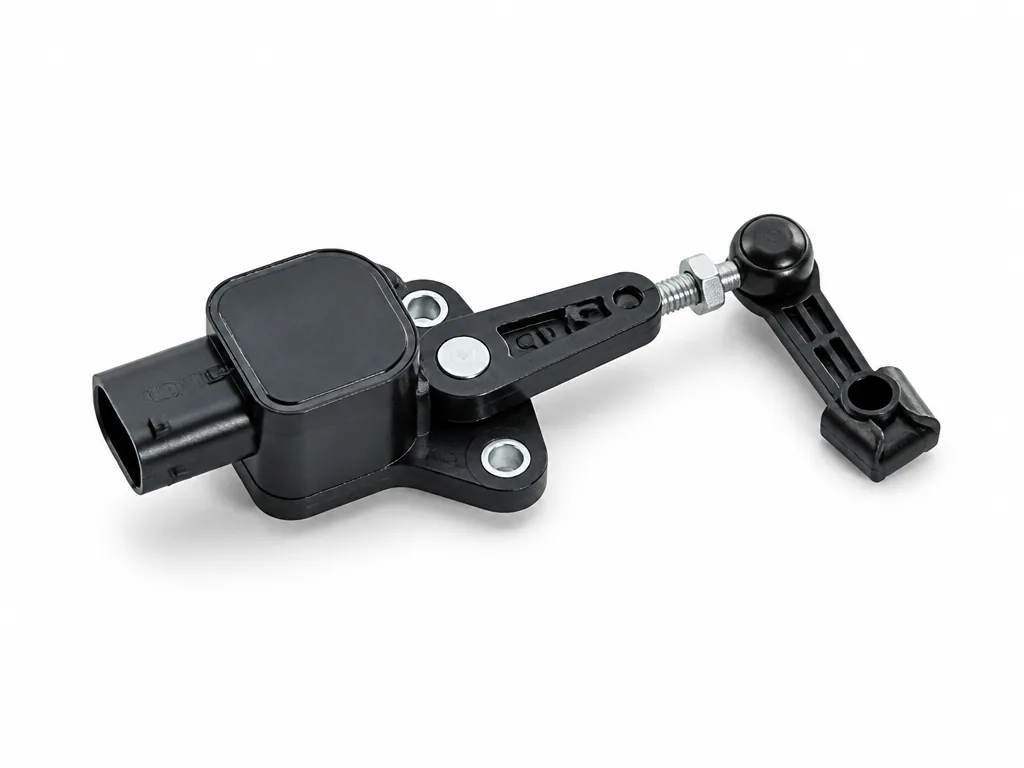
Discovery 2 rear height sensor
There is one on each side. Tell us which side the code named, plus your VIN.
Problem 4: Door switch and off-road switch wiring
The SLS uses the door switches to know when people or load are getting out. If the door wiring is broken or shorted to the battery supply, the system levels whenever a door is open; if it is shorted to earth, it will not level 2. A wiring fault can also stop off-road mode from selecting, and a failed off-road switch can turn the mode on by itself 3.
Keep the air springs, or convert to coil springs?
Discovery 2s without SLS left the factory with rear coil springs 4, so coils are the factory alternative, not an improvisation. South African owners are split. A Sandton owner switched after his air suspension let him down “far to many times in the bush” 12, while the Somerset West owner kept his and reports no trouble since he replaced the height sensors and cleaned the valves and pump 13.
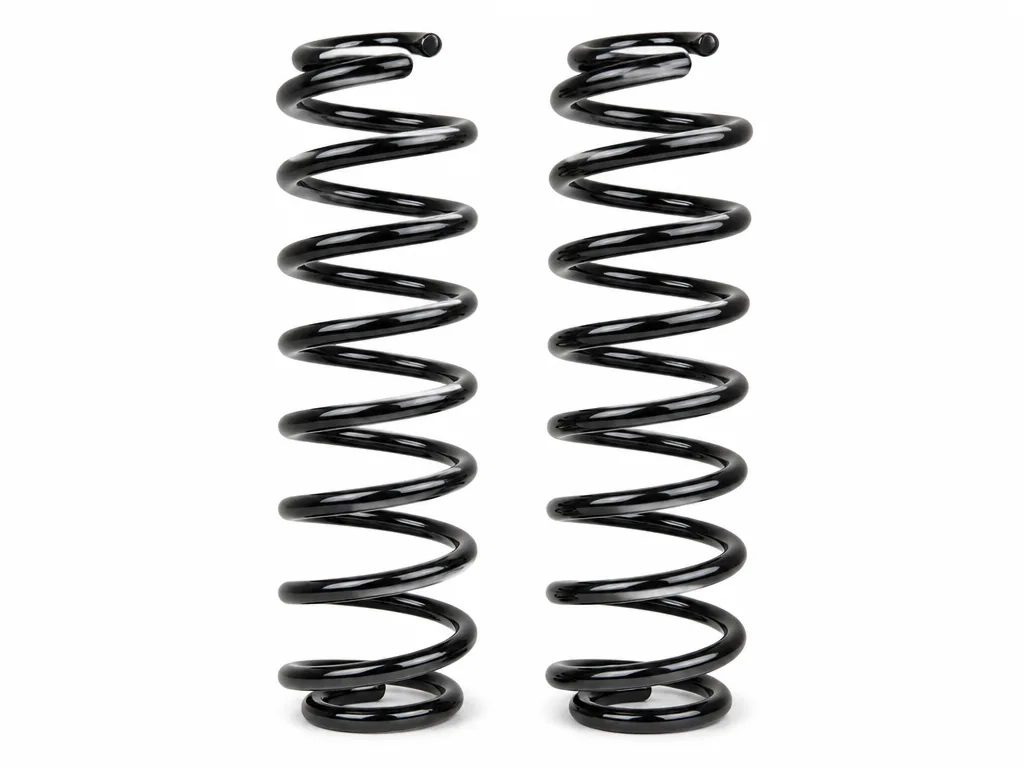
Discovery 2 rear coil conversion
Going to coils? Tell us, and we will quote the springs and the parts that go with them as one set.
Either way, tell us which way you are going, and we will quote the air parts or the rear coil springs to match. Everything else for the system is on our Discovery 2 air suspension parts page. If you also own a later Discovery, its four-corner system works differently: see our Discovery 3 and 4 air suspension guide.
Know which part failed?
Send us the VIN, the fault code if you have one, and the part. The parts desk at SparesBoyz in Durban North will come back with the options. Phone and email details are on our contact page.
FAQ
How do I reset the Discovery 2 air suspension?
The manual does not describe a reset a driver can do. Faults are stored in the SLABS ECU and read with TestBook 6, and a replaced height sensor needs a TestBook calibration 15. What you can do is rule out normal behaviour: start the engine, close every door and hold the off-road switch for at least half a second 111. Three beeps mean the system refused the request because of axle articulation or a fault 11.
What are some common air suspension faults in the Discovery 2?
The manual’s failure tables name the compressor, its relay and wiring (the rear will not rise), the two air control valves (uneven levelling) and the height sensors or their links (no levelling at all) 23. South African owners on the SA 4x4 Community forum add blocked intake filters, worn compressor bearings and dirty valves 1213.
How can you tell if your air compressor is bad?
With the engine running, all doors closed and the vehicle below 30 km/h, select off-road mode. Land Rover quotes 15 to 20 seconds at sea level for the rear to reach off-road height 11. If it does not rise and the SLS light is on, the manual’s list is relay, wiring or compressor 3, so read the codes and check the relay and the intake filter before you buy a compressor.
Sources
- Land Rover Discovery Series II Workshop Manual — Rear suspension, Description: SLS, page 64-12
- Land Rover Discovery Series II Workshop Manual — Description: SLS, failure modes, page 64-19
- Land Rover Discovery Series II Workshop Manual — Description: SLS, failure modes, page 64-20
- Land Rover Discovery Series II Workshop Manual — Description: SLS, air springs, page 64-16
- Land Rover Discovery Series II Workshop Manual — Description: SLS, air supply unit, page 64-13
- Land Rover Discovery Series II Workshop Manual — Description: SLS, air dryer, valves and intake filter, page 64-14
- Land Rover Discovery Series II Workshop Manual — Description: SLS, height sensors, page 64-15
- Land Rover Discovery Series II Workshop Manual — Description: SLS, SLABS ECU, page 64-17
- Land Rover Discovery Series II Workshop Manual — Description: SLS, compressor relay, page 64-18
- Land Rover Discovery Series II Workshop Manual — Rear suspension, Operation, page 64-21
- Land Rover Discovery Series II Workshop Manual — Operation: off-road and extended modes, page 64-22
- SA 4x4 Community Forum — "Disco 2 suspension problems" (February to October 2010)
- SA 4x4 Community Forum — "Air suspension problems" (July 2025)
- Land Rover Discovery Series II Workshop Manual — Repairs: air spring, SLS, page 64-30
- Land Rover Discovery Series II Workshop Manual — Repairs: height sensor and compressor unit, SLS, page 64-35
Need a part for your Land Rover?
Send the vehicle, ideally the VIN, and the part you need. The parts desk will come back with the options.
Disclaimer
This article is general information, not a diagnosis of your vehicle. Land Rover Pro Spares is a parts supplier, not a repair workshop. Have faults checked and repairs done by a qualified mechanic, and check with a Land Rover dealer whether any open recall applies to your vehicle before paying for a repair.
Land Rover, Defender, Discovery, Freelander, Range Rover, Evoque and Velar are trademarks of Jaguar Land Rover Limited. Land Rover Pro Spares is an independent parts supplier and is not affiliated with, endorsed by or sponsored by Jaguar Land Rover.