
Freelander 2 Rear Diff Failure: Diff, Haldex or Bearing?

Freelander 2 rear diff failure usually starts as a whine, hum or drone from the back of the car, and on a four-wheel-drive Freelander 2 the usual suspect is the rear differential’s pinion bearing. Land Rover documented the fault in a technical bulletin, SSM46477 1. A different warning, a traction control light with a “Traction Reduced” message, points instead at the Haldex coupling bolted to the front of that diff 24. The two faults are linked, which is why the expensive mistake is to replace one without looking at the other.
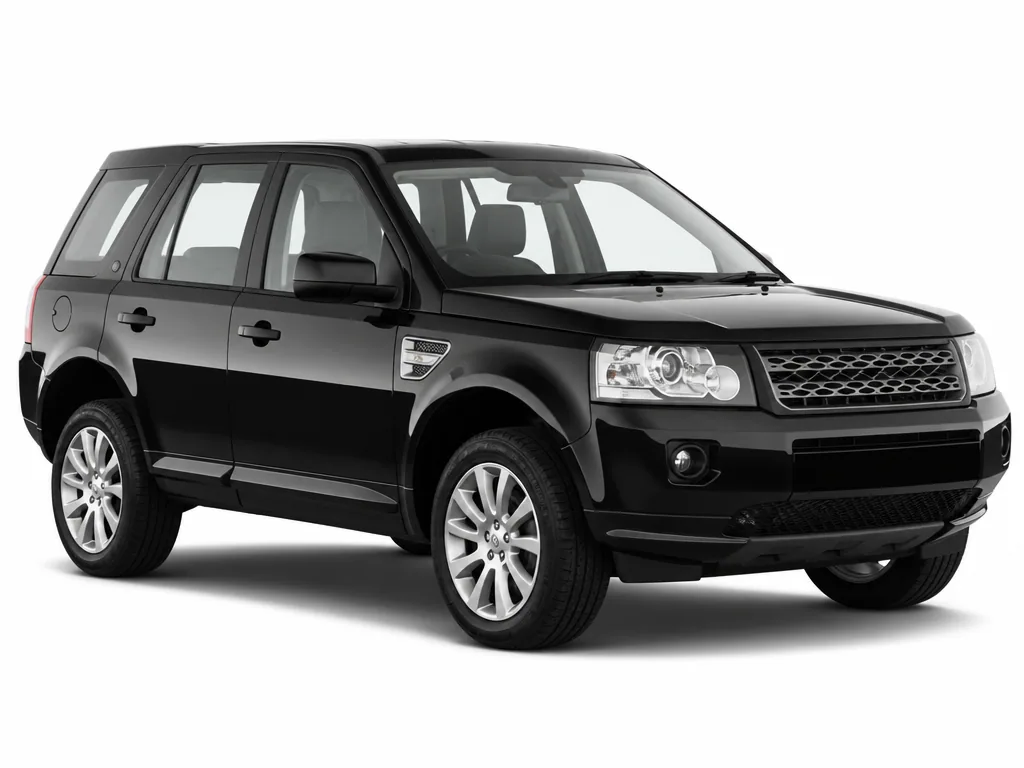
This guide covers the four-wheel-drive Freelander 2 (L359) only, because both faults need the Haldex coupling and rear differential that four-wheel-drive cars carry.
Key Takeaways
- A whine, hum or drone from the rear of a four-wheel-drive Freelander 2 is commonly a worn rear differential pinion bearing.
- Land Rover’s bulletin SSM46477 names the root cause as “Pinion Tail Bearing spalling caused by subsurface material deformation”.
- A worn wheel bearing can make a very similar noise, so have the source confirmed before you buy a differential.
- A “Traction Reduced” warning with the traction control light on points at the Haldex coupling or its pump, not the diff itself.
- After a diff repair, the bulletin’s Haldex software update applies only to Generation 4 couplings, fitted from the start of 2009 model-year production.
- A UK differential specialist recommends changing the Haldex unit at the same time as the rear differential.
How the Freelander 2 rear driveline works
The Freelander 2 drives through its front wheels and brings the rear wheels in when needed. A power transfer unit (PTU), driven from the gearbox, sends drive down a propshaft towards the rear 23. There, a Haldex coupling with its own control module 1 passes drive on to the rear differential, which splits it between the rear wheels. K Motors, a UK independent garage, describes the Haldex pump as sitting “in between the propshaft and the rear differential”, applying torque to the diff “when pulling away or during slow speed manoeuvring” 2.
Several units sit between the gearbox and the rear wheels, and only one of them is the rear diff. For engines, gearboxes and derivatives by year, see our Freelander 2 parts overview.
Problem 1: whine, hum or drone from the rear
What you hear
Land Rover’s bulletin describes the complaint as an “Excessive rumble/humming noise or high pitched whine coming form the rear of the vehicle” 1 (the typo is the bulletin’s own). K Motors says the noise is “particularly noticeable when driving at a constant higher speed”, but can start at low speeds 2. We Are Diffs, a UK differential rebuilder, describes it as “a drumming or humming sound coming from the rear” 3.
Why it happens
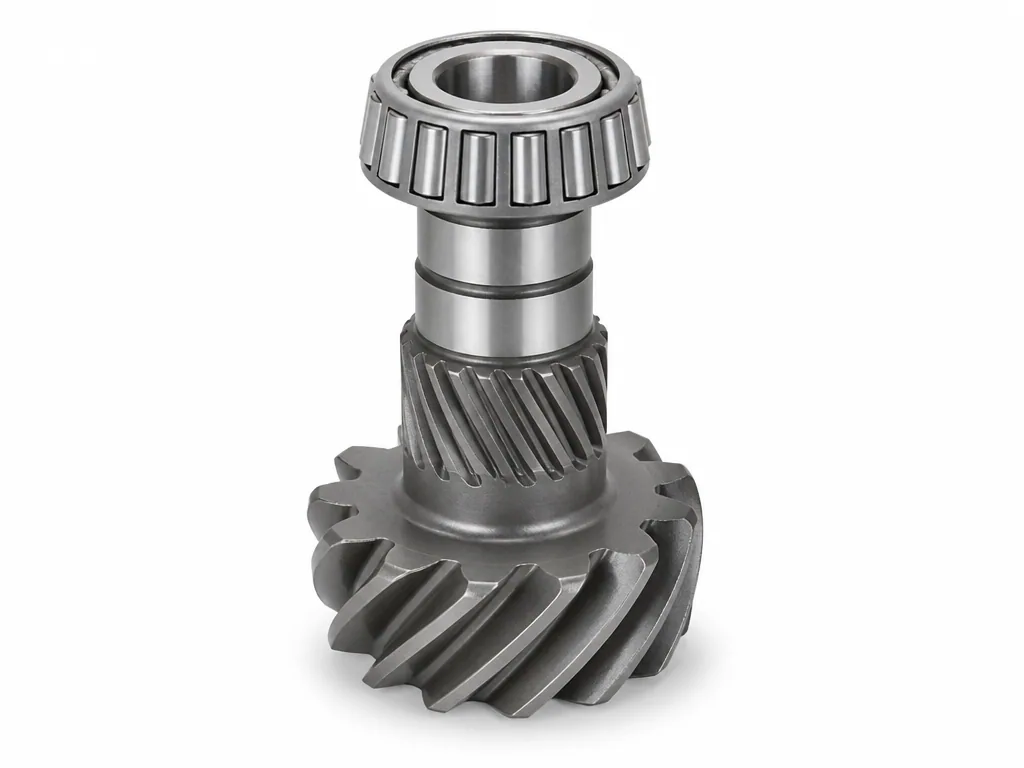
The bulletin, SSM46477, is filed under LR2 / L359: LR2 is the Freelander 2’s North American name and L359 its model code. It is a service bulletin, not a recall. Its stated root cause is “Pinion Tail Bearing spalling caused by subsurface material deformation”, and it adds that the “Cause of subsurface deformation is static overload” 1. In plain terms, the bearing at the tail of the pinion gear is overloaded, the metal under its surface deforms, and flakes break away, which is what makes the noise.
Two UK specialists explain it differently:
- K Motors says “the pinion bearing was over tightened at manufacture and wears prematurely” 2.
- We Are Diffs says that, according to Land Rover, the damage comes from “the way in which the Haldex coupling unit applies torque when moving away from stand still or during slow speed manoeuvring” 3. Its own view is that the original bearings were under-rated, so it fits heavy-duty bearings in rebuilds 3.
Which cars
The three sources describe the affected cars differently.
What each source says about the affected cars
We Are Diffs reports the same rear bearing noise on the related Range Rover Evoque (L538) 3.
Rule out a wheel bearing first
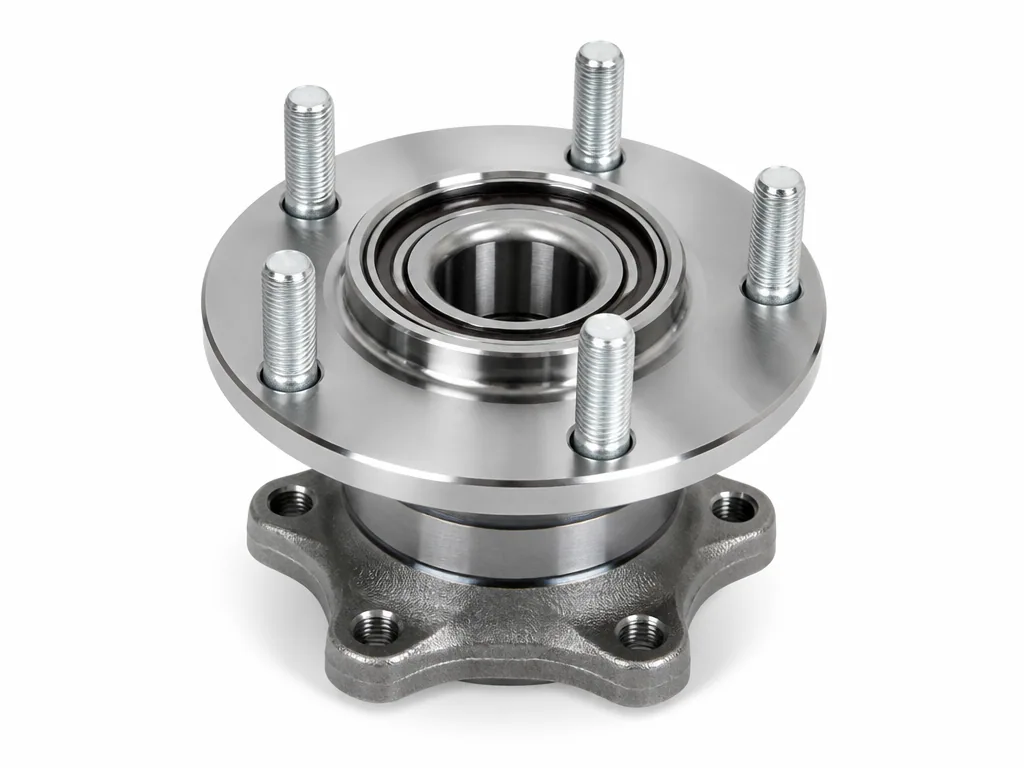
K Motors warns that “a worn wheel bearing can make a very similar noise”, and that you need to be sure before you buy, because the diff is the expensive repair 2. In its front wheel bearing guide, the garage says a bad bearing gets louder with speed and when cornering, and shows play when the jacked-up wheel is rocked 2.
On the LandyZone owner forum, one member suggests checking the diff oil first: grey oil or metallic flecks mean the diff is damaged, while clean oil suggests it has escaped 4. That is owner advice, not a workshop procedure, but it is a cheap check.
Recondition or replace
Once the diff is confirmed, there are two routes. The first is to recondition your unit with new bearings and seals; pinion gears, pinion bearings and pinion seals are covered in our diff pinion and bearing parts range. The second is to fit a complete replacement rear differential. Either way, a workshop does the job: the diff has to come out of the car.

Freelander 2 rear diff bearings and seals
For reconditioning a noisy rear differential: pinion bearings and oil seals. Tell us whether your workshop is rebuilding the unit you have.
Problem 2: “Traction Reduced” warning and the Haldex coupling
What you see
K Motors says a faulty Haldex pump “can make a low humming noise but the most tell tale sign is the traction control light is illuminated and a ‘Traction Reduced’ warning message appears in the panel” 2. On LandyZone, one member quotes the message as “transmission fault - reduced traction” and says the Haldex is then disengaged, putting the car into two-wheel drive 4.
What the driver sees
Despite the word “transmission”, both K Motors and that owner link the warning to the Haldex 24, so on a Freelander 2 with no gear-change complaint, start with the coupling at the rear. Our Freelander 2 transmission and driveline parts page covers the gearbox as well as the rear driveline, if the codes point elsewhere.
What causes it
The message is a symptom, not a diagnosis, so have a workshop read the stored fault codes before you order a pump or a whole coupling. If the codes leave you unsure, send them to the parts desk with your VIN.
What owners say about Haldex servicing
Check the service history for Haldex work, and go by Land Rover’s schedule for your VIN, not a figure quoted for another make.
The software update and Generation 3 versus Generation 4
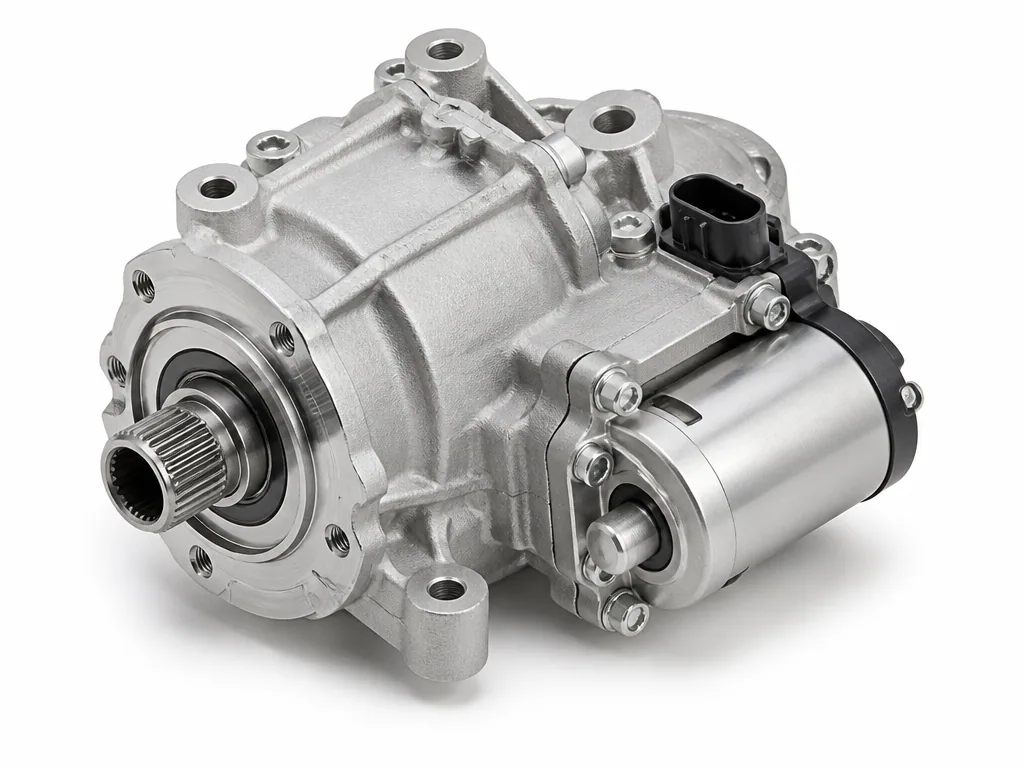
After a pinion bearing repair or a diff replacement, the bulletin says “a software update has been made available to help prevent premature pinion bearing failure in the future”, loaded into the Haldex coupling control module 1. It then adds a limit:
“This software is only available for Generation 4 Haldex couplings which were fitted from Start of 2009 MY vehicle manufacture.” 1
MY means model year. The bulletin also notes that some cars built before 2009 MY with a Generation 3 coupling have since had a Generation 4 coupling fitted during repairs, and can take the update too 1. We Are Diffs says the earlier Generation 3 units cannot be re-flashed 3. So on an early Freelander 2, find out which coupling is fitted before assuming the update is available.
Why the rear diff and Haldex go together
We Are Diffs is direct about it: “We highly recommend changing the Haldex unit when replacing the old rear differential.” Its reasoning is that a new diff on an old Haldex unit “can cause big problems and fail again” 3. Land Rover’s own bulletin makes a related point from the other side, by tying the Haldex software update to the diff repair 1.
For a noisy rear end, the sensible order is:
- 1Confirm it is the rear diff and not a wheel bearing.
- 2Read the Haldex fault codes and check which coupling generation is fitted.
- 3Choose between reconditioning the diff and a replacement, and price the Haldex at the same time.
- 4Have the Generation 4 software update applied after the repair, where it is available.
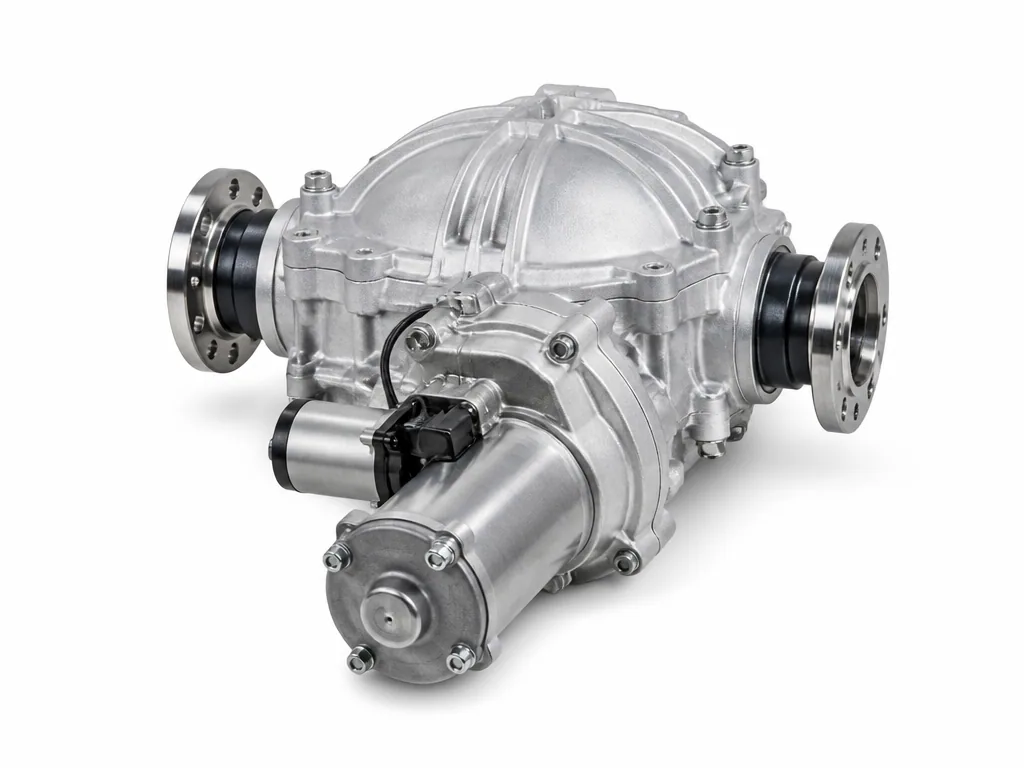
Freelander 2 rear diff with Haldex coupling
The diff and coupling priced together, or either on its own. Send what the workshop found and the coupling generation if you know it.
A noise from the front is a different part
If the drumming seems to come from the front footwell, look forward. We Are Diffs says a “drumming or whirring noise from the front foot-well area” is a symptom of the PTU nose bearing failing, and that the unit can be reconditioned if it is caught early but “if left too long will fail catastrophically” 3. Replacement PTUs are covered on our transfer case and PTU page.
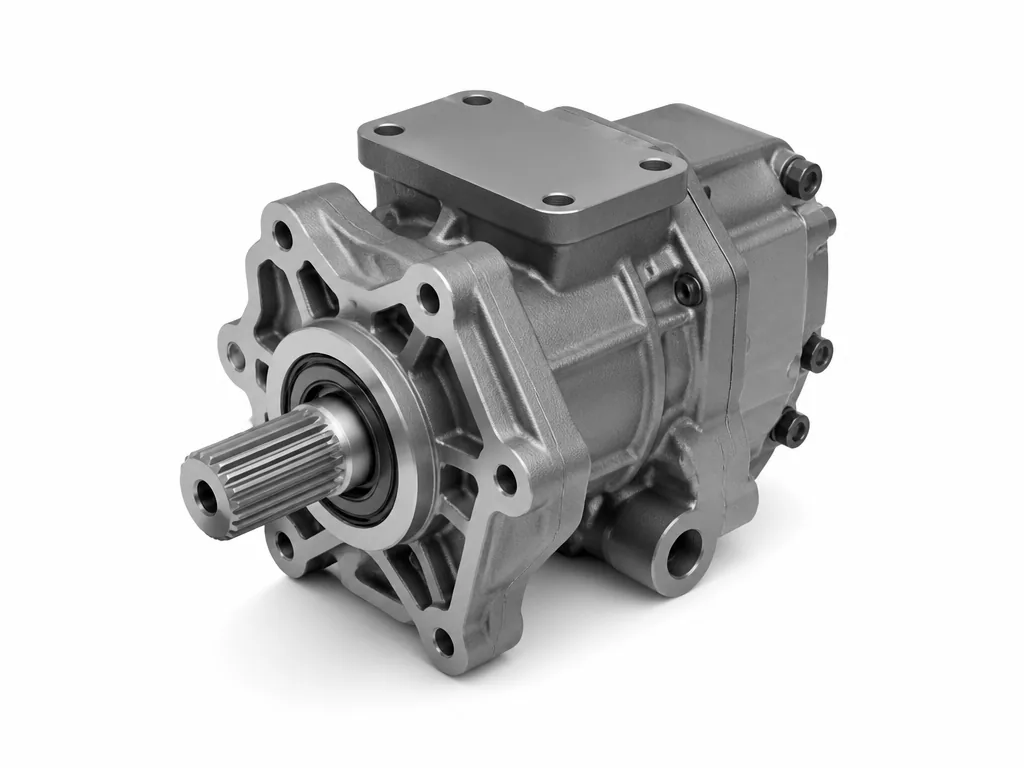
Freelander 2 power transfer unit (PTU)
Worth checking before a rear diff is condemned for a noise that is really coming from the front of the car.
FAQ
What are the symptoms of a failing rear differential?
On a four-wheel-drive Freelander 2, the classic sign is noise: a whine, hum or drone from the rear that is easiest to hear at a steady speed 12. One LandyZone member also suggests checking the diff oil for a grey colour or metal flecks 4.
What are some common faults found on the Freelander 2?
Beyond the rear diff and Haldex, K Motors lists the 2.2 diesel’s timing belt as essential scheduled maintenance, split intercooler hoses causing loss of power, power steering whine, fuel gauge faults from corroded sender connectors, a failing ignition key dock and failing door latches 2.
Is it worth fixing the rear differential?
On a Freelander 2 you plan to keep, usually yes, because a noisy pinion bearing does not repair itself and the car relies on the diff for four-wheel drive. The real choice is between reconditioning your unit and fitting a replacement, and whether to do the Haldex at the same time 3.
Two cheap checks before you order anything
What are the symptoms of Haldex failure in Freelander 2?
A traction control light and a “Traction Reduced” message, sometimes with a low hum 2, and, one owner says, the car dropping to two-wheel drive 4.
How do I know if my Haldex is failing?
Have the fault codes read, because the warning alone does not say which part of the coupling is at fault. A low hum from just ahead of the rear diff is another clue 2.
What to send with your enquiry
- Model year, engine and VIN.
- The coupling generation, if you know which one is fitted.
- What the workshop found, and the stored fault codes if they have been read.
How much does it cost to replace a Haldex unit on a Freelander 2?
We do not publish a figure, because the price depends on the condition of the unit and on which coupling generation your car needs. Send the VIN for a quote on the right coupling.
How expensive is it to fix a rear differential?
It depends on the route: new bearings and seals in your own unit, or a replacement unit so you are not waiting for a rebuild. Workshop labour to remove and refit the diff applies to both, which is another reason to price the Haldex at the same time.
Freelander 2 whining from the rear? Get the right part first time.
Send the model year, engine and VIN for a quote on the rear differential, the Haldex coupling or both.
Sources
- Land Rover (Jaguar Land Rover), TOPIx SSM46477: Freelander 2 Rear Differential Noise with reference to LTB00342, last modified 25 November 2010, filed with NHTSA. static.nhtsa.gov
- K Motors, Common Problems and Fixes: Freelander 2. kmotors.co.uk
- We Are Diffs, Freelander 2 and Range Rover Evoque Transmission Problems. wearediffs.com
- LandyZone forum, Freelander 2 diff and Haldex (owner discussion). landyzone.co.uk
Need a part for your Land Rover?
Send the vehicle, ideally the VIN, and the part you need. The parts desk will come back with the options.
Disclaimer
This article is general information, not a diagnosis of your vehicle. Land Rover Pro Spares is a parts supplier, not a repair workshop. Have faults checked and repairs done by a qualified mechanic, and check with a Land Rover dealer whether any open recall applies to your vehicle before paying for a repair.
Land Rover, Defender, Discovery, Freelander, Range Rover, Evoque and Velar are trademarks of Jaguar Land Rover Limited. Land Rover Pro Spares is an independent parts supplier and is not affiliated with, endorsed by or sponsored by Jaguar Land Rover.