




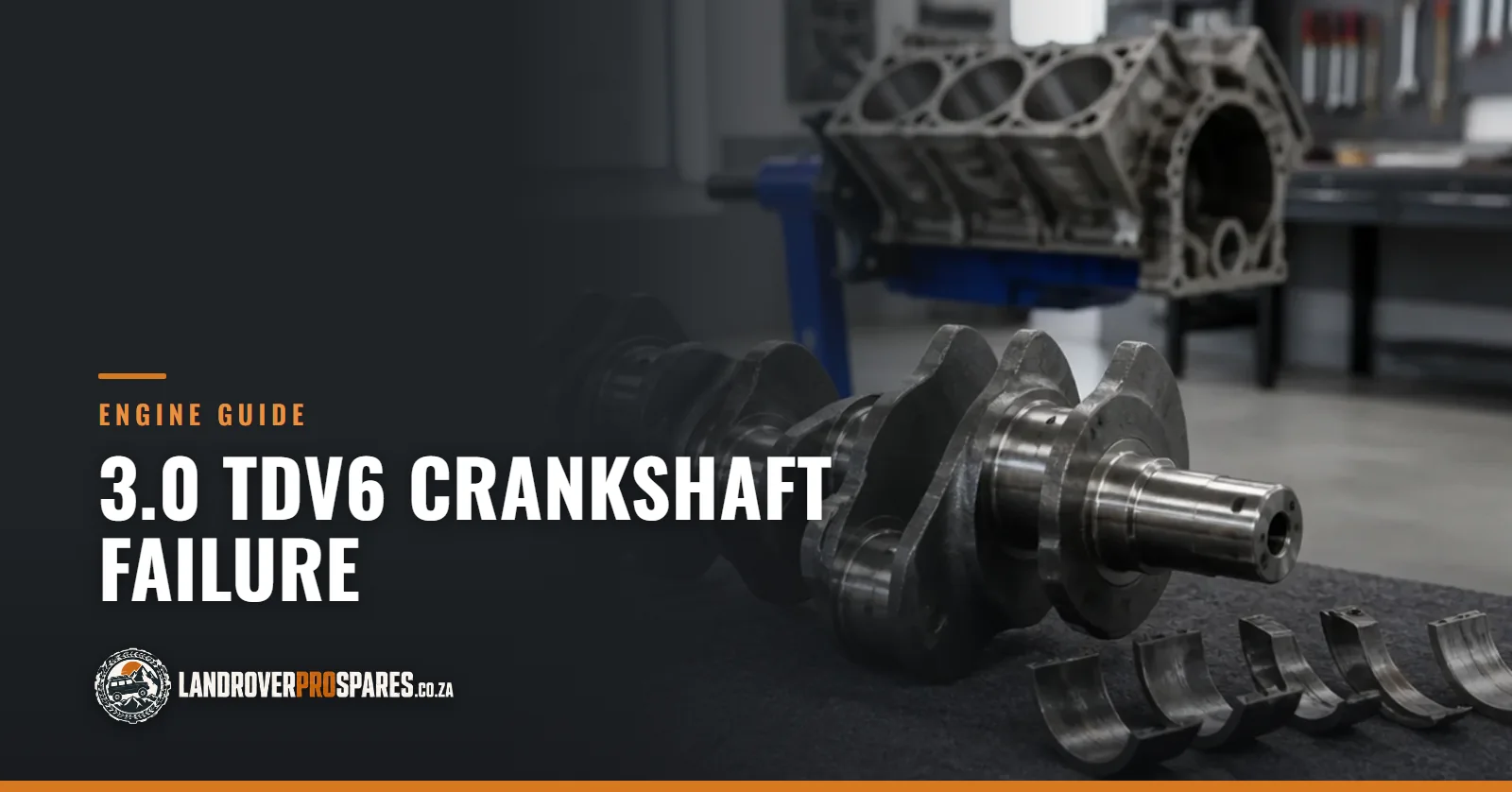
3.0 TDV6 Crankshaft Failure: Rebuild or Replace the Engine?

A 3.0 TDV6 crankshaft failure usually starts with the bearing shells, not the crank itself. A main or big-end shell stops holding its place, the oil film goes, and the journal it was protecting is damaged. On the Discovery 4, Discovery 3 and Range Rover Sport L320 V6 diesels, the only repairs are a rebuild or a replacement engine, with no roadside fix 4. Which one makes sense depends on what the strip-down finds. Before anyone quotes you for either, rule out the cheaper cause that looks like a crank failure from the driver’s seat: a faulty crank position sensor.
Key Takeaways
- Jaguar Land Rover South Africa confirmed in 2015 that V6 diesel engines built before 2012 could suffer crankshaft bearing failures, and said engines made since 2012 use a new bearing design. That is the manufacturer’s statement, not a guarantee: an owner on a UK forum reports a 2016 dealer bulletin on the same failure for the 3.0 TDV6 in the 2013-on Range Rover (L405).
- The warning signs are a deep knock that gets worse under load, an oil pressure light that flickers or stays on, and in the worst case an engine that has seized or holed its block.
- Switch off at the first knock or oil pressure warning. Driving on turns a bearing job into a crank, rod and turbo job.
- A no-start or sudden cut-out is not automatically a broken crank. A failed crank position sensor can do the same, so have a dealer check the VIN for open recalls first.
- Rebuild when the damage is limited to the crank, shells and perhaps a rod. Look at a replacement engine when the block is holed, the crank has snapped or the turbos are also gone.
Which Land Rovers are affected
The clearest local statement comes from a 2015 IOL report. A Discovery owner had complained to the Motor Industry Ombudsman after a crankshaft bearing failed and her engine seized. The article reported that the affected models included the Discovery 3 and 4, the Range Rover and the Range Rover Sport, “confirmed by Jaguar Land Rover South Africa” 1.
JLR South Africa’s spokeswoman gave three details worth knowing 1:
- The issue affected “only 1.3 percent of Land Rover engines sold in South Africa over the past 10 years”, by the company’s own count.
- “Changes have been made at a production level and all new engines manufactured since 2012 use a new bearing design.”
- “While it’s not possible to establish whether an engine is susceptible, the cause was identified”, in a technical report issued to dealers.
Treat the 2012 date as a production change, not a line after which the problem stopped.
On the fullfatrr owners' forum, a member who searched Land Rover's dealer technical system for the 2013-2018 Range Rover (L405) with the 3.0 TDV6 found a bulletin titled "SSM72928 - Crankshaft/Crankshaft Bearing Failure - TDv6 Diesel Engine", published 23 August 2016 5. We have not seen that bulletin ourselves, so it is reported here as that owner's search result.


Which V6 diesel you have matters when you order parts. South African Discovery 3 models used the 2.7 TDV6. The SA-market Discovery 4 was sold with the 3.0 diesel, while other markets also got the older 2.7 TDV6 6, and local used listings show both 3.0 TDV6 and SDV6 Discovery 4s. If you drive the original Range Rover Sport (L320), check the engine plate or VIN, because that model ran V6 diesels as well as V8s.
The Range Rover in JLR SA’s list needs a note. For full-size Range Rover owners, the V6 diesel question is about the later L405 5.
| Model | Where the V6 diesel question stands |
|---|---|
| Discovery 3 | South African models used the 2.7 TDV6 |
| Discovery 4 | Sold in SA with the 3.0 diesel; other markets also got the older 2.7 TDV6, and local used listings show both 3.0 TDV6 and SDV6 |
| Range Rover Sport (L320) | Ran V6 diesels as well as V8s, so check the engine plate or VIN |
| Range Rover (L322, sold before 2012) | Not a V6: a BMW six-cylinder diesel, then 3.6 and 4.4 TDV8 diesels |
| Range Rover (L405, 2013-2018) | The full-size Range Rover the 3.0 TDV6 question applies to |
The table restates the sources above. Check your own engine plate or VIN before ordering parts.
What goes wrong inside the engine
Land Rover’s 2014 dealer bulletin SSM71816, as quoted by the South African LandyOnline blog, put the cause plainly. Crankshaft failures were “caused mainly by incorrect location of the main bearing shells during assembly, or through rotation of the shells during normal use” 2.
Specialist rebuilders add their own explanations, and it is worth reading them as workshop opinion rather than proven root cause:
- Crank design. UK rebuilder Dieselheads describes the 3.0 TDV6 crank as “compact and narrow”, with weak points between the rod journals and the counterweights. It says the usual result is spun bearings, “both mains and conrod”, and that it has sometimes found the crank snapped at those points 3.
- Oil supply. Vogue Technics, another UK engine rebuilder, calls oil starvation “the real villain” and names a worn oil pump, a lost pump drive or a clogged pickup as common triggers. It also argues that the SDV6 puts more torque through broadly the same bottom end 4.
Either way, once a shell has turned, the journal behind it is usually damaged. A bearing that spins can also take the connecting rods with it, and the rebuild quote grows with every part it touches.
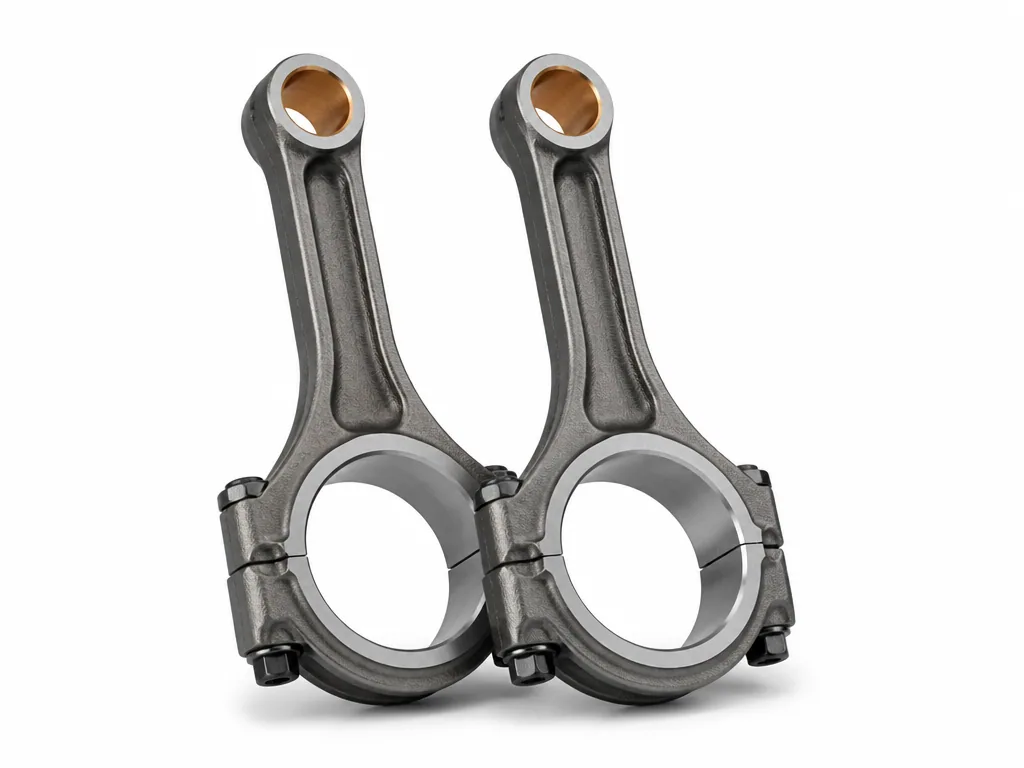
Symptoms of TDV6 crankshaft bearing failure
The dealer bulletin listed the typical signs 2:
- The crankshaft is seized: the engine cannot be turned by the starter motor or by the crankshaft pulley bolt.
- The sump or cylinder block is holed, with oil leaking and metal debris on the engine under-tray.
- The engine makes a loud rumbling or knocking noise that gets worse under load.
- The oil pressure warning light flashes or stays on, especially at low engine speeds.
Rebuilders describe the same failure from the owner’s side: “a sudden bang or a heavy knock, instant power loss, and an engine that either won’t turn or runs horribly rough” 4. The owner in the IOL case said drivers may get very little warning before the engine stops 1.
A knock is not always the crank. Dieselheads notes that over-fuelling injectors on the 3.0 TDV6 can melt a piston, and that failure also shows up as a knocking engine 3.
Whatever the cause, stop driving.
Dieselheads warns that low oil pressure while an engine is knocking makes turbocharger failure "an inevitability" if the vehicle is kept on the road 3. Vogue Technics' advice is simple: "If your oil light comes on, treat the car as undriveable until it's diagnosed" 4.
First, rule out the crank position sensor
A lot of people searching for “crankshaft” problems on these vehicles are actually dealing with the crank position sensor. It is a small electrical part, not the crankshaft, and a fault there can stop the engine without any mechanical damage.
Ask a Land Rover dealer to run your VIN for open recalls before you pay for anything. Compare the symptoms, too: the bulletin describes a failed crank as an engine that cannot be turned at all 2, which is not the same as an engine that turns over on the starter but will not fire. If the sensor is the culprit, it is a sensors order, not an engine order.
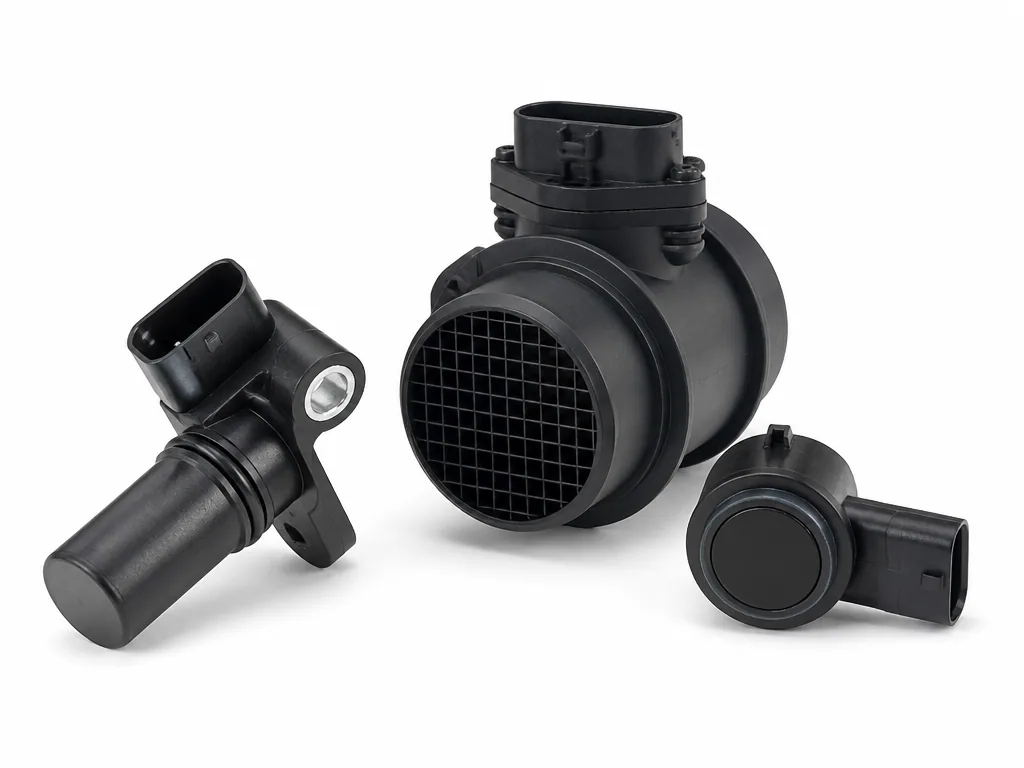
Crank Position Sensor
For an engine that turns over but will not fire, once a dealer has checked your VIN for open recalls. Send the VIN and engine code.
Rebuild or replacement engine: how to decide
Nobody can tell you which route is right until the sump is off and the crank is out. Ask whoever strips the engine for a written report with photos of the crank journals, the shells, the rods and the bores. Then match what they found to the likely route:
| What the strip-down finds | Likely route |
|---|---|
| Worn shells, crank journals still in spec | Bottom-end rebuild with new shells, plus any oil-supply repair, if it was caught early |
| Spun shells, crank journals damaged | Rebuild with a replacement crank and new shells |
| A rod bent or damaged by a spun big-end | Rebuild, adding rods to the parts list |
| Snapped crank, or a rod through the block or sump | Replacement engine is usually the realistic option |
| Turbos damaged after driving on low oil pressure | Add turbos to whichever route you choose |
The table is our reading of the sources above, not a workshop’s diagnosis of your engine. A few other things usually tip the decision:
- How far the damage spread. A rebuild makes sense when the block, head and turbos are sound. Once the block is holed, the bulletin’s worst case 2, the block itself has to be replaced, and a complete replacement engine is usually the simpler route.
- Matching the engine. Give the engine code, 2.7 TDV6, 3.0 TDV6 or 3.0 SDV6, and the VIN before ordering a replacement crankshaft or a complete unit, so the part is matched to your engine rather than to the model name.
- The rest of the parts list. A rebuild means new main and big-end bearing shells, gaskets and seals, and an oil pump if the oil supply is suspected 4. The wider range sits under Discovery 4 engine parts.
- The value of the vehicle. On an older, high-mileage Discovery 3 or early Discovery 4, compare the repair bill to what the vehicle is worth once it runs again.
What does it cost? We have no current South African price we can stand behind, so we will not give you a range. The one local figure on record is dated. In the 2015 IOL case, the owner of a 2008 Discovery 3 with 132,000km on the clock was quoted R260,000 for the repair 1. That is one quote, from one workshop, eleven years ago. In the same case, JLR SA said vehicles still under warranty would be repaired free, and it offered goodwill assistance on out-of-warranty cases. That owner was offered a third of the parts cost, and she turned it down 1.
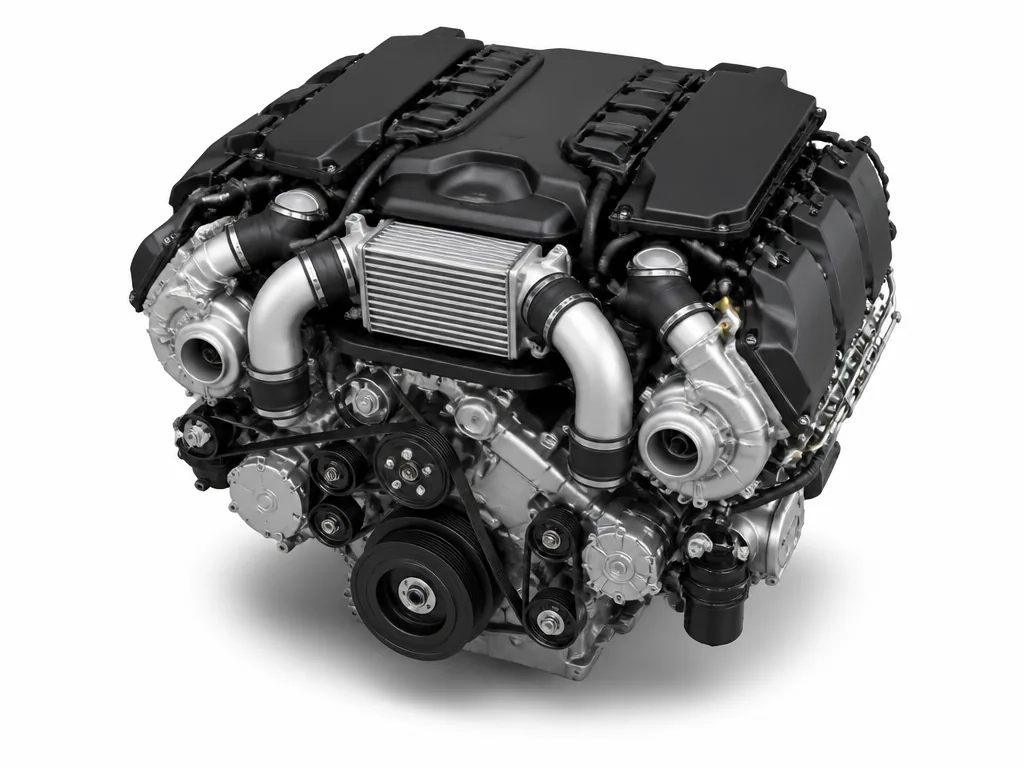
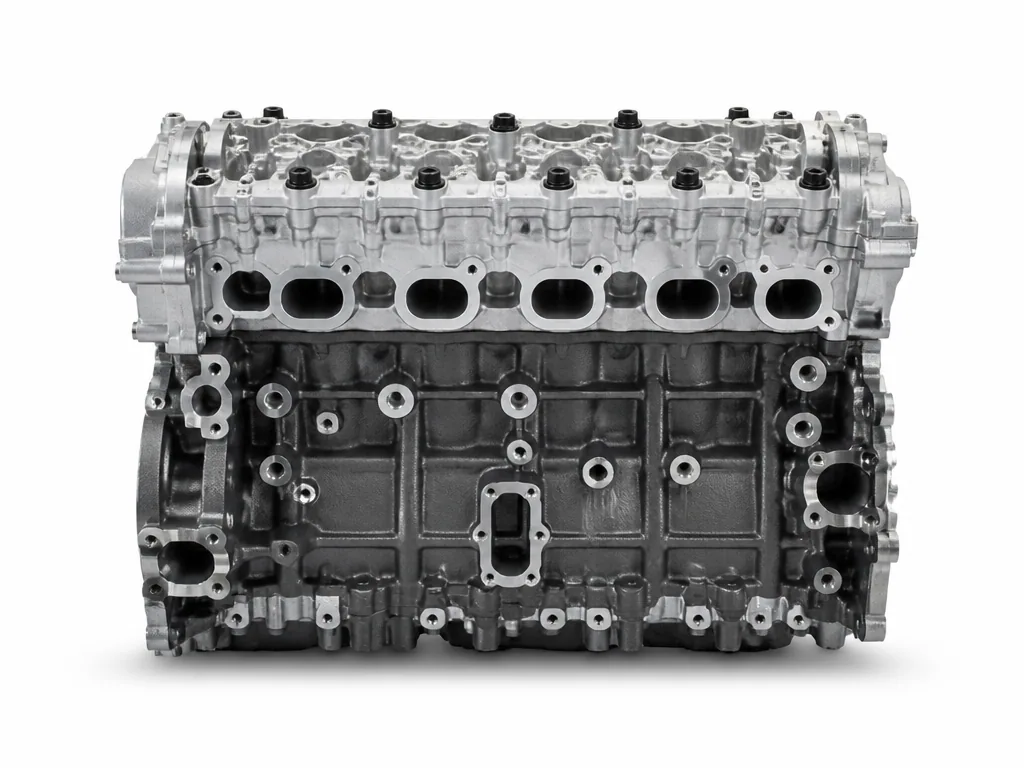
Replacement 3.0 TDV6 / SDV6 Engine
For a holed block, a snapped crank or a rebuild that no longer adds up. Send the VIN and engine code so the unit matches your Discovery 4 or Range Rover Sport.
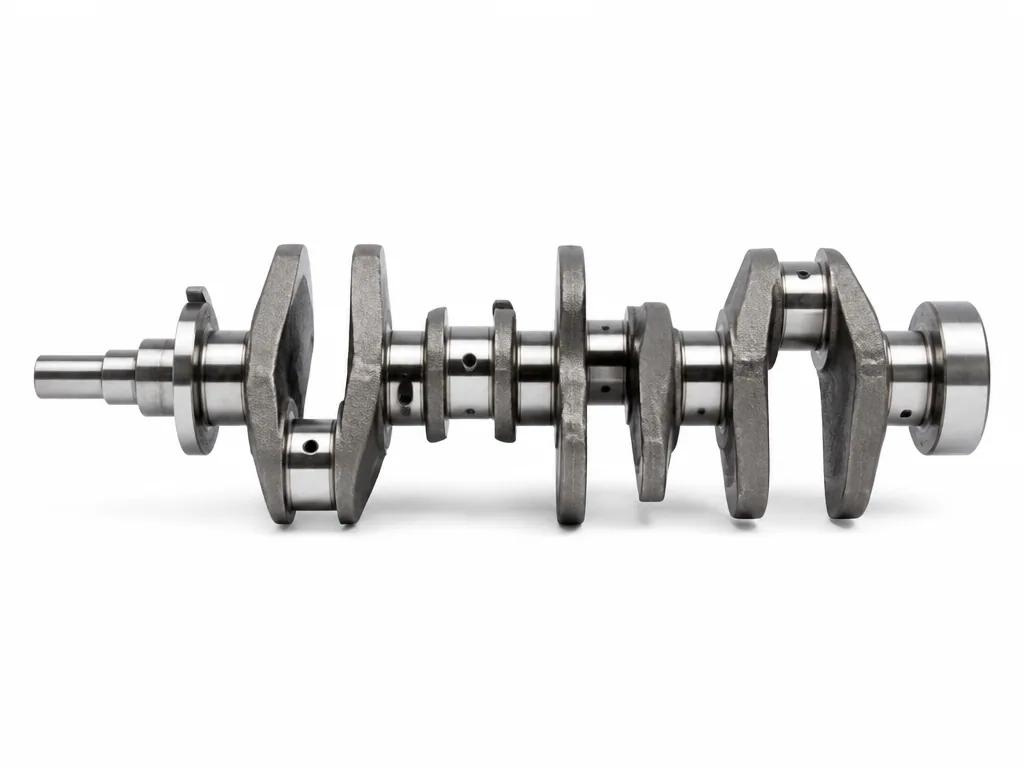
TDV6 / SDV6 Crankshaft
For a rebuild where the journals are damaged but the block is sound. Tell us whether the engine is a 2.7 TDV6, 3.0 TDV6 or 3.0 SDV6.
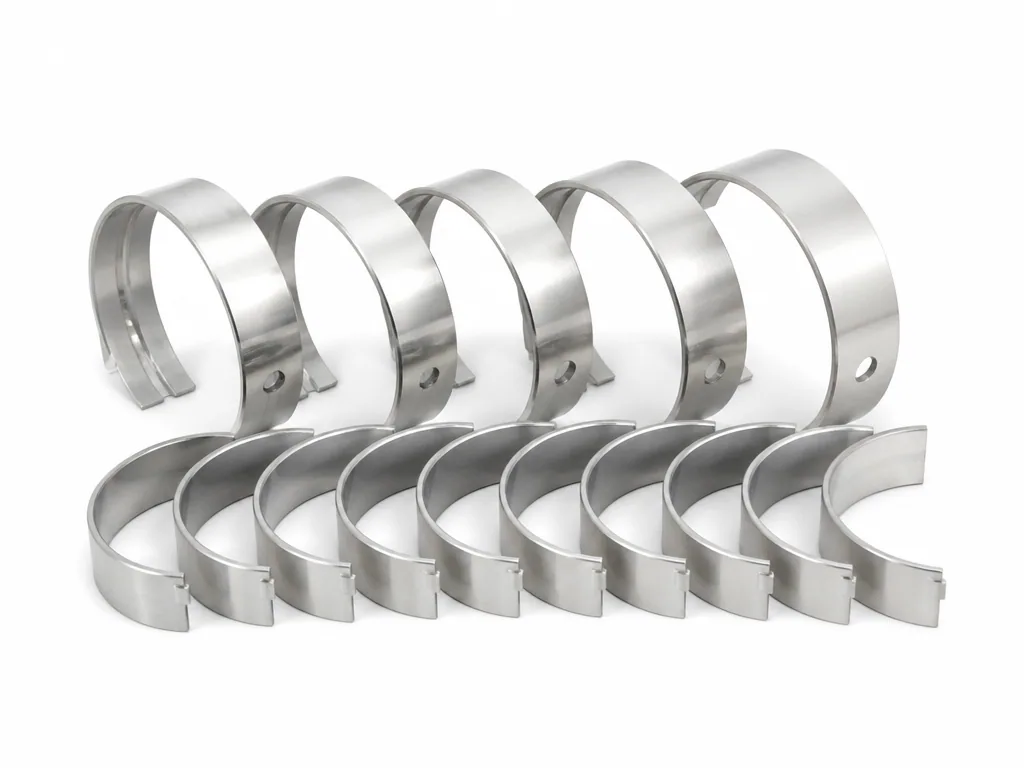
Main and Big-End Bearing Shells
New shells are part of any crank rebuild. Ask for mains and big-ends together, matched to the crank that is going in.
TDV6 crank gone? Price both routes.
Send your VIN, engine code and the strip-down findings. We will quote the rebuild parts and a replacement engine so you can compare them side by side.
Keeping a repaired engine healthy
A new crank does nothing for an engine whose oil supply caused the first failure. Vogue Technics says most of these failures trace back to lost oil pressure and can largely be prevented “with regular oil changes and prompt attention to warning lights” 4. After a rebuild or an engine swap, keep to the service schedule with the correct oil, and never drive on with a flickering oil pressure light.
If the turbos saw low oil pressure before the engine stopped, have them checked before the new engine runs on them 3. A turbo that has been starved of oil is a poor thing to bolt onto a fresh bottom end. We also quote on complete twin turbo units for the V6 diesels.
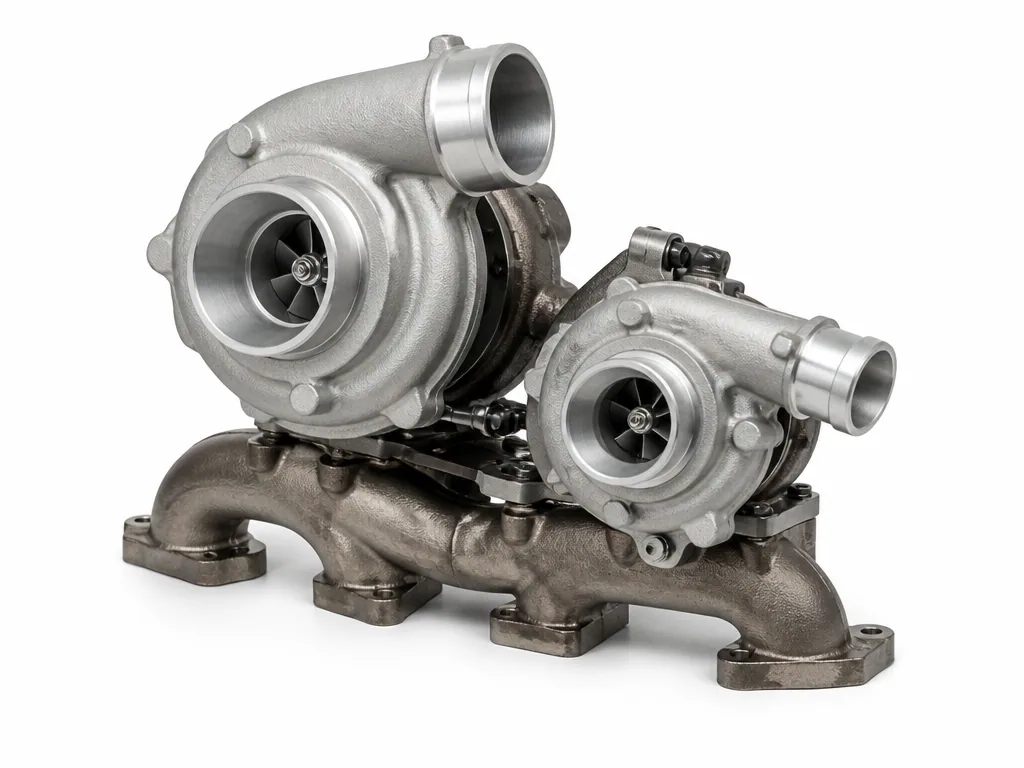
Related: 3.0 TDV6 / SDV6 Turbochargers
If the engine was driven while knocking, the turbos may need replacing as well. Include them in the same enquiry.
FAQ
What are the symptoms of a failing crankshaft?
A deep knock from low in the engine that gets louder under load, often with an oil pressure warning at low revs. On a TDV6 that knock usually comes from a spun bearing before the crank itself breaks.
How much does it cost to replace the crankshaft in a Discovery 4 3.0 TDV6?
There is no fixed price, because the crank is rarely the only damaged part. The bill depends on whether the block, rods and turbos survived, on the labour to remove and rebuild the engine, and on whether a replacement engine turns out cheaper. Get the strip-down findings in writing, then contact us with the engine code for parts pricing on both routes.
What are the common problems with the Land Rover 3.0 V6 engine?
Rebuilders name crankshaft and bearing failure first, followed by oil pump and oil-pressure problems, turbocharger wear, EGR and DPF blockages, and injectors that wear or seize in the cylinder head 4.
What are the common causes of crankshaft failure?
On the TDV6, Land Rover’s own bulletin blamed bearing shells placed incorrectly during assembly or turning in use 2. Rebuilders add oil starvation and the stress on a narrow crank design 34. Missed oil changes and ignored oil pressure warnings make every one of those worse.
What is the most common problem with the Range Rover Sport?
It depends on the generation and engine. For the V6 diesel L320, the most serious known fault is the crankshaft bearing failure that JLR South Africa confirmed in 2015 1.
How much does it usually cost to fix a crankshaft?
A crank that has only worn its bearings, caught early, is the cheapest case. A crank that has spun a shell usually needs replacing, along with new shells. A snapped crank that damaged the block usually means a replacement engine. The strip-down, not the symptom, decides which bill you face.
Sources
- IOL Motoring — Unease grows over Land Rover engine (6 October 2015)
- LandyOnline — Land Rover Discovery TDV6 engine failures making headlines (quotes dealer bulletin SSM71816)
- Dieselheads (UK engine rebuilder) — Land Rover 3.0 TDV6 engine
- Vogue Technics Engine Rebuild (UK) — Range Rover Sport 3.0 TDV6 Engine Problems: Causes and Fixes
- fullfatrr.com owners' forum — L405 3.0 TDv6 crankshaft failure (rumours and facts), bulletin SSM72928
- SA 4x4 — Off-road test: Land Rover Discovery 4 3.0 TDV6 HSE
Need a part for your Land Rover?
Send the vehicle, ideally the VIN, and the part you need. The parts desk will come back with the options.
Disclaimer
This article is general information, not a diagnosis of your vehicle. Land Rover Pro Spares is a parts supplier, not a repair workshop. Have faults checked and repairs done by a qualified mechanic, and check with a Land Rover dealer whether any open recall applies to your vehicle before paying for a repair.
Land Rover, Defender, Discovery, Freelander, Range Rover, Evoque and Velar are trademarks of Jaguar Land Rover Limited. Land Rover Pro Spares is an independent parts supplier and is not affiliated with, endorsed by or sponsored by Jaguar Land Rover.